
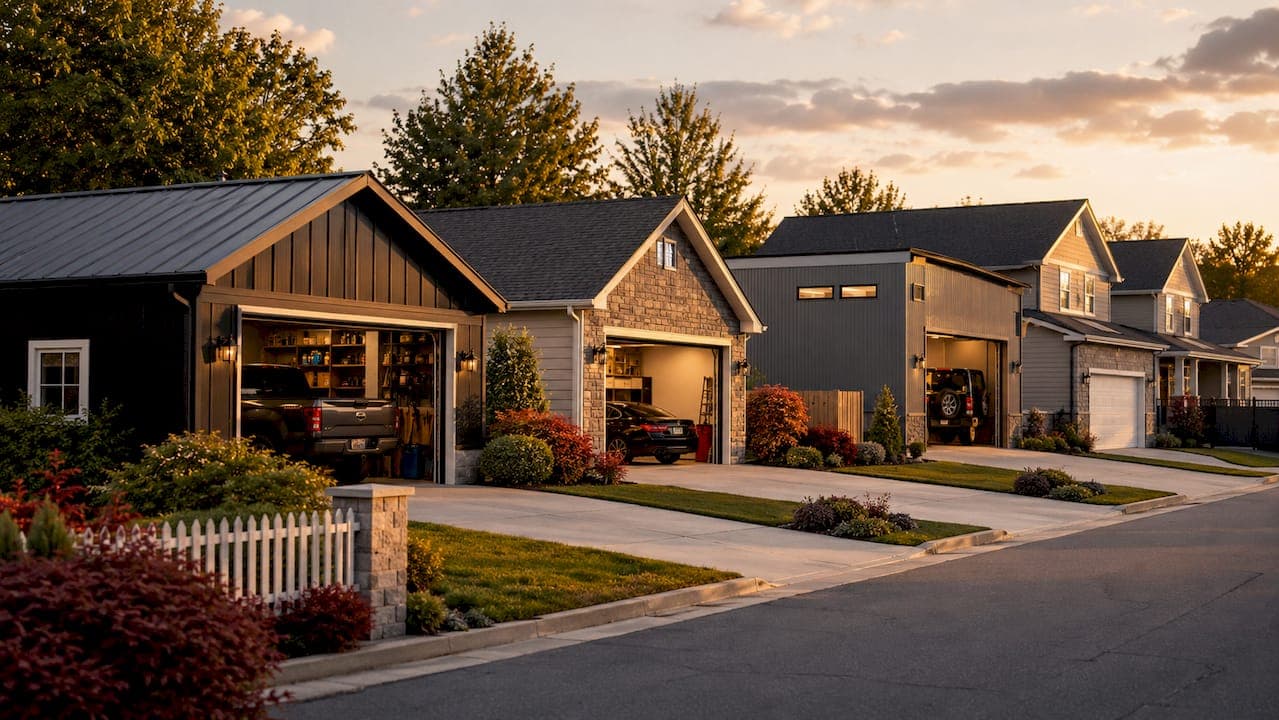
Garages are defined as enclosed structures attached to or separate from a home, designed primarily for vehicle storage and expanded as multipurpose spaces for workshops, storage, and home additions. A well-planned garage adds measurable property value and daily convenience. Brands like Husky and Gladiator have built entire product lines around the demand for better garage storage. Properly designed garages not only add practical value but also boost overall property value and attract potential buyers. Whether you are building from scratch or reorganizing an existing space, the decisions you make early determine how useful your garage becomes for years.
1. What are the main types of garages?
Garages fall into several distinct categories, each suited to different budgets, lot sizes, and homeowner goals. Understanding the differences before you build or buy saves you from costly changes later.
Attached garages connect directly to the home's main structure. They require complex foundations and fire-rated walls, which increases both cost and construction time. The benefit is direct interior access, which most homeowners prioritize in cold or rainy climates.

Detached garages stand independently on the property. Detached garages offer greater design flexibility than attached garages, allowing use as workshops, guest houses, or home offices without affecting the main home's footprint. This makes them a strong choice for property investors looking to add an accessory dwelling unit (ADU).
Prefabricated metal garages are factory-built structures shipped to your site. Metal garages can be installed in as little as 8–12 hours on a prepared site. That speed makes them a cost-effective alternative to traditional wood-framed construction, especially for rural properties or investment lots where budget matters most.
Single-car, two-car, and three-car garages describe size configurations rather than construction types. A two-car garage is the most common choice for American households. Three-car garages are increasingly popular among property investors because they signal premium value to buyers.
Specialty garages include RV garages, luxury garages with climate control, and tandem garages. An RV garage build requires ceiling heights of 14 feet or more and reinforced concrete floors. Luxury garages often include epoxy flooring, custom cabinetry, and dedicated electrical circuits for EV chargers.
| Garage Type | Construction Complexity | Best Use |
|---|---|---|
| Attached | High | Daily vehicle access, cold climates |
| Detached | Medium | Workshops, ADUs, home offices |
| Prefabricated metal | Low | Budget builds, rural properties |
| Three-car | Medium-High | Premium homes, investor properties |
| RV/Specialty | High | Large vehicles, luxury builds |
2. How to organize your garage using six universal zones
A universal six-zone layout maximizes garage efficiency by organizing spaces for parking, workshop, seasonal storage, daily items, bulk storage, and utilities. Each zone serves a specific function, and mixing them creates the clutter most homeowners are trying to escape.
Start with the parking zone. The vehicle parking area plus door-swing clearance is the largest zone in any garage and must stay completely free of storage. Every other zone wraps around this non-negotiable space.
The remaining five zones follow a logic based on frequency of use:
- Workshop zone: Place near a window or exterior wall for ventilation. Include a workbench, power strip, and task lighting.
- Daily items zone: Position closest to the door leading into the house. This is where backpacks, sports gear, and frequently used tools live.
- Bulk storage zone: Use deep shelving along a back wall for paper goods, cleaning supplies, and pantry overflow.
- Seasonal and long-term zone: Assign overhead racks or high shelves for holiday decorations, camping gear, and items used fewer than four times per year.
- Utility zone: Reserve a corner for the water heater, HVAC equipment, and electrical panel with clear access paths.
Walking paths between zones must be at least 3 feet wide. Narrower paths create bottlenecks and make the garage feel cramped even when it is technically organized.
Pro Tip: Map your zones on paper before buying a single shelf or bin. Measuring your actual floor space first prevents the most common and expensive garage organization mistake.
3. Maximizing storage: walls, ceilings, and the dead zone
Vertical space is the most underused asset in any garage. Overhead ceiling racks can provide up to 400 square feet of additional storage in a standard two-car garage. Ceiling racks typically support between 450 and 600 lbs each, making them suitable for bulky seasonal items and storage bins.
Wall storage systems come in four main types, each with different load capacities and best uses:
- Slatwall panels: Modular and flexible. Hooks, bins, and shelves slide into horizontal channels. Best for tools, sports equipment, and frequently rearranged items.
- Pegboard: Lightweight and inexpensive. Ideal for hand tools, cords, and small accessories. Not suited for heavy loads.
- French cleat systems: Interlocking angled strips that support heavy shelves and custom tool holders. Woodworkers and serious DIYers favor these for workshop walls.
- Metal shelving units: Bolt-together shelving units from brands like Husky and Gladiator provide strong, stable storage capable of holding heavy equipment and bulk supplies. They outperform clip-together wire shelves for any heavy-duty purpose.
The "dead zone" above your garage door tracks is one of the most overlooked storage areas in any home. This space above the door tracks is perfect for storing lightweight, bulky, or seasonal items using ceiling-mounted shelving. Holiday decorations, folded lawn chairs, and spare sporting goods fit here without consuming wall or floor space.
Pro Tip: Install a French cleat wall before you buy any wall-mounted storage products. The system costs less than most branded slatwall kits and lets you reconfigure your layout without drilling new holes.
4. Garage design and construction considerations
Defining your garage's primary purpose before breaking ground is the single most important design decision you will make. Homeowners often fail to maximize space because they never assign a specific function, such as a home gym or workshop, before construction begins. A garage built without a clear purpose ends up serving none well.
Key construction factors to address before you build:
- Foundation type: Attached garages share the home's foundation system and require matching materials. Detached garages typically use a monolithic slab, which is faster and less expensive.
- Fire-rated walls: Attached garages require fire-rated drywall on walls and ceilings shared with the living space. This is a code requirement in most jurisdictions, not an option.
- Electrical planning: Plan for at least four dedicated circuits: general lighting, workbench outlets, a garage door opener, and a future EV charger. Adding circuits after drywall is installed costs significantly more.
- Lighting: LED shop lights mounted to the ceiling provide the most even coverage. Supplement with under-cabinet task lighting at the workbench.
- Climate control: Detached garages in North Texas benefit from insulated walls and a mini-split system if you plan to use the space as a workshop or home office year-round.
- Permits and zoning: Most municipalities require a building permit for any new garage construction. Setback requirements vary by lot size and zoning district. Check with your local planning department before finalizing your design.
The detached garage planning process involves at least 10 distinct decisions before you break ground. Getting professional guidance early prevents redesigns that add cost and delay.
5. Common garage organization mistakes and how to avoid them
The most expensive garage organization mistake is buying storage products before planning your zones. Garage organization experts confirm that the best results come from planning zones based on actual usage patterns and physical measurements before purchasing anything. Shelves bought without measurements often do not fit, or worse, they fit but end up in the wrong location.
Other frequent mistakes include:
- Placing active tools in back corners: Active tools placed at eye level near garage entrances prevent inefficiency. Tools buried in back corners add frustration and wasted time to every task.
- Skipping the full empty method: The full empty method removes every item from the garage before reorganizing. This prevents the common trap of organizing around existing clutter, which produces a tidier mess rather than a functional space.
- Using unlabeled bins: Clear containers with printed labels make retrieval fast. Opaque bins with no labels turn storage into a guessing game.
- Ignoring weight limits: Overloading wire shelving or wall-mounted pegboard causes failures. Match the storage system to the weight of what you plan to store.
- Skipping magnetic toolholders: Magnetic tool strips mounted near the workbench keep chisels, screwdrivers, and wrenches visible and within reach. They free up drawer space and eliminate the "where did I put that" problem entirely.
Pro Tip: Take photos of your garage before and after each organization session. The before photo is a powerful motivator, and the after photo shows you exactly what worked so you can replicate it in other areas.
Key takeaways
A well-planned garage requires a clear purpose, a zone-based layout, and vertical storage before any product purchase.
| Point | Details |
|---|---|
| Define purpose first | Assign a specific function before building or reorganizing to avoid wasted space. |
| Zone before you buy | Map all six zones and measure the floor before purchasing any shelving or bins. |
| Use vertical space | Ceiling racks and wall systems add hundreds of square feet of storage without expanding the footprint. |
| Match garage type to goals | Detached garages suit workshops and ADUs; attached garages suit daily vehicle access. |
| Plan construction details early | Electrical, lighting, and permits cost far less when addressed before drywall goes up. |
What 25 years of garage builds taught me
Most homeowners come to PRO Construction with a vague idea: "I want a better garage." The ones who end up with spaces they genuinely love are the ones who arrived with a specific answer to one question: what will this garage do for me every single day?
The clients who struggle are the ones who treat the garage as a catch-all. They buy shelving before measuring, skip the zone planning, and end up with a space that looks organized but functions poorly. The full empty method is not glamorous, but every client who has used it has thanked us for insisting on it.
Detached garages consistently surprise homeowners with how much they change daily life. When the workshop is separate from the house, you actually use it. The noise stays outside, the sawdust stays outside, and the project stays in progress instead of getting packed away every evening.
Vertical space is the investment most homeowners underestimate. A two-car garage with ceiling racks and a French cleat wall has more usable storage than a three-car garage with bare walls. The structure matters less than the system inside it.
— PRO
Build the garage your property deserves
PRO Construction has spent over 25 years building custom garages across Keller, Argyle, and the broader DFW area. With a top 1% ranking on BuildZoom, the team brings transparent project management and quality materials to every build, from single-car detached structures to full three-car luxury garages with EV charging and climate control.

Whether you are a homeowner planning a workshop space or a property investor adding an ADU, PRO Construction delivers a finished product that holds its value. Explore custom garage building services in Keller and the surrounding area, or review the 2026 Argyle homeowner's guide to understand your options before your first consultation. Request a free design consultation and get a clear plan before you break ground.
FAQ
What is the fastest type of garage to build?
Prefabricated metal garages are the fastest option, with installation taking as little as 8–12 hours on a prepared site. Traditional wood-framed or attached garages require significantly longer timelines due to foundation and framing work.
How many zones should a garage have?
A well-organized garage uses six zones: parking, workshop, daily items, bulk storage, seasonal storage, and utility. Each zone serves a distinct function and prevents the clutter that comes from mixing categories.
Do detached garages add property value?
Yes. Detached garages add property value by expanding usable square footage and offering flexible uses such as workshops, home offices, or ADUs. Properly designed detached garages attract buyers and support higher listing prices.
What is the best wall storage system for a garage?
French cleat systems and bolt-together metal shelving from brands like Husky and Gladiator are the strongest options for heavy-duty storage. Slatwall panels work well for frequently rearranged tools and sports equipment.
Do I need a permit to build a garage in Texas?
Most Texas municipalities require a building permit for new garage construction. Setback requirements and zoning rules vary by city and lot size, so confirm with your local planning department before finalizing any design.