
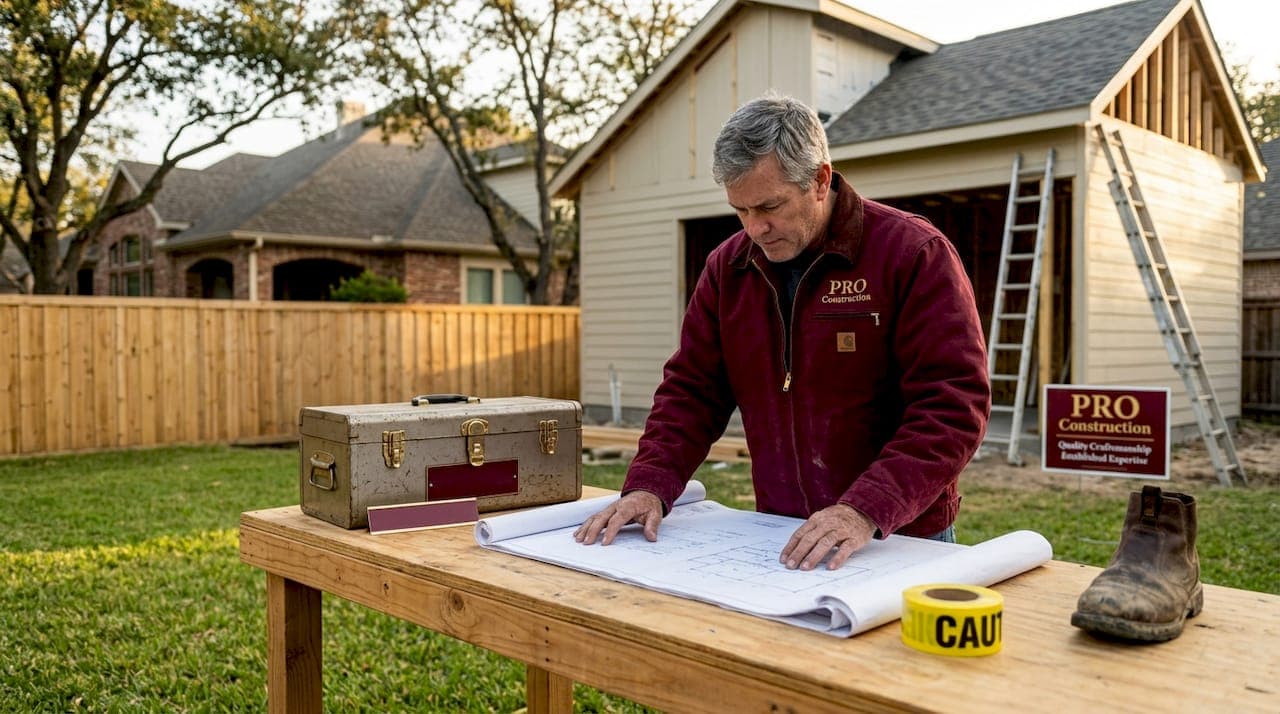
Building an ADU on your North Texas property sounds straightforward until you start making calls. You quickly realize that not every contractor who says they "do additions" actually knows how to navigate local permitting, coordinate utilities, or sequence inspections correctly. When you hire contractor ADU experience becomes the single most important factor separating a smooth build from a costly mess. This guide gives you a practical, no-nonsense framework for finding, vetting, and working with experienced ADU contractors in the Keller, Fort Worth, and greater North Texas area.
Table of Contents
- Key takeaways
- Hire contractor ADU experience: what actually matters
- Pre-hiring prep: your checklist before making calls
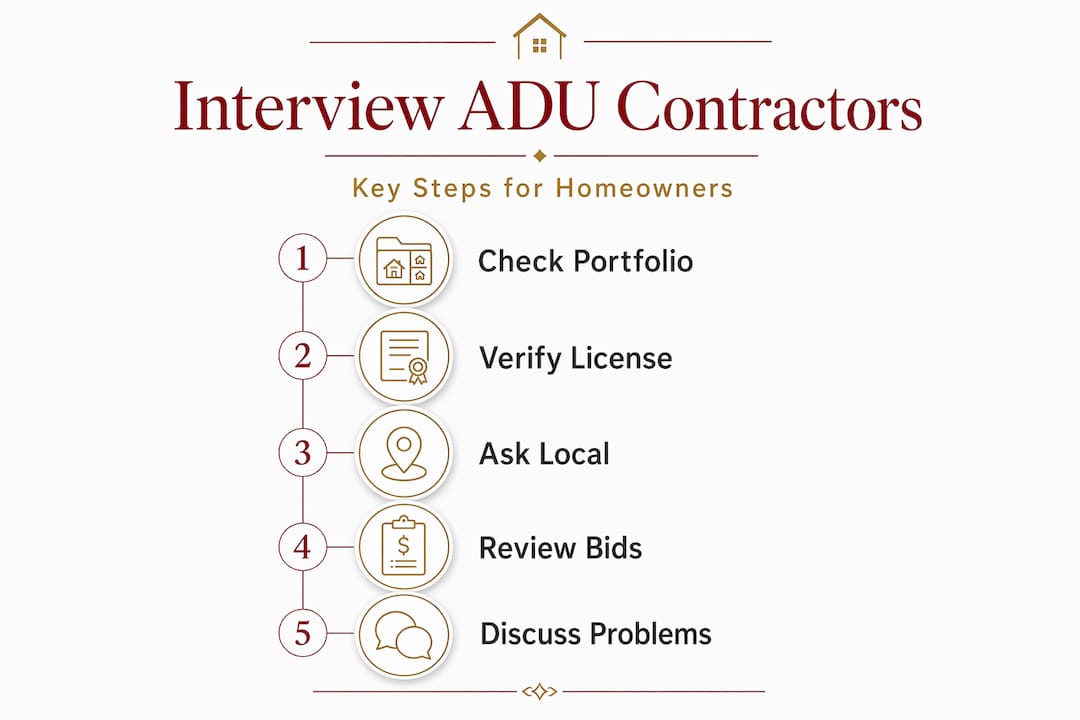
- Step-by-step guide to finding and hiring the right contractor
- What to expect once construction begins
- The hybrid approach: where DIY makes sense
- My take on why ADU experience is worth paying for
- How Proconstructiontx helps North Texas homeowners build ADUs right
- FAQ
Key takeaways
| Point | Details |
|---|---|
| Experience over price | Choosing the cheapest bid often leads to budget overruns from inexperienced contractors underestimating ADU complexity. |
| Local knowledge matters | North Texas contractors familiar with local codes handle permitting faster and avoid costly compliance failures. |
| Pre-hiring prep is critical | Set your budget, outline your ADU goals, and compile a vetting checklist before you contact a single contractor. |
| Ask the right questions | Focused interview questions about ADU-specific projects separate generalist builders from true ADU specialists. |
| Hybrid builds can save money | Hiring licensed pros for structural and utility phases while managing finish work yourself can reduce costs safely. |
Hire contractor ADU experience: what actually matters
Not all construction experience transfers to ADU builds. A contractor who has built dozens of custom homes may still struggle with the specific demands of an accessory dwelling unit because the project type involves a unique combination of skills.
ADU construction requires expertise across several distinct phases:
- Permitting and zoning compliance: North Texas municipalities each have their own ADU ordinances. An experienced contractor navigating permits in Keller will know the exact setback requirements, lot coverage limits, and utility connection rules without guessing.
- Structural work: Foundation type, framing, and load calculations must meet local building codes. Errors here are expensive to fix after the fact.
- Utility connections: Tying a new ADU into your existing water, sewer, and electrical systems requires licensed tradespeople and proper inspections.
- Inspections management: Experienced contractors reduce risk of failed inspections and costly rework by sequencing work correctly from day one.
Local knowledge is not a bonus. It is a requirement. A contractor who has worked in Tarrant County or Denton County knows which inspectors are strict about specific details, how long permit approvals typically take, and how to write a scope of work that sails through plan review. That kind of knowledge only comes from local North Texas licensing and years of regional project history.
Pro Tip: Ask any contractor you interview to name the specific municipality where your property sits and describe one permitting challenge they have solved there. Vague answers are a red flag.
Pre-hiring prep: your checklist before making calls
Hiring the right contractor starts before you ever pick up the phone. Homeowners who skip preparation end up accepting bids they cannot properly evaluate.
Here is what you need to have ready:
Budget baseline. ADU projects often start at $130,000 even for smaller builds. That number surprises most first-time ADU owners. Set a realistic range, not a wish number, and add a 15 to 20 percent contingency for surprises.
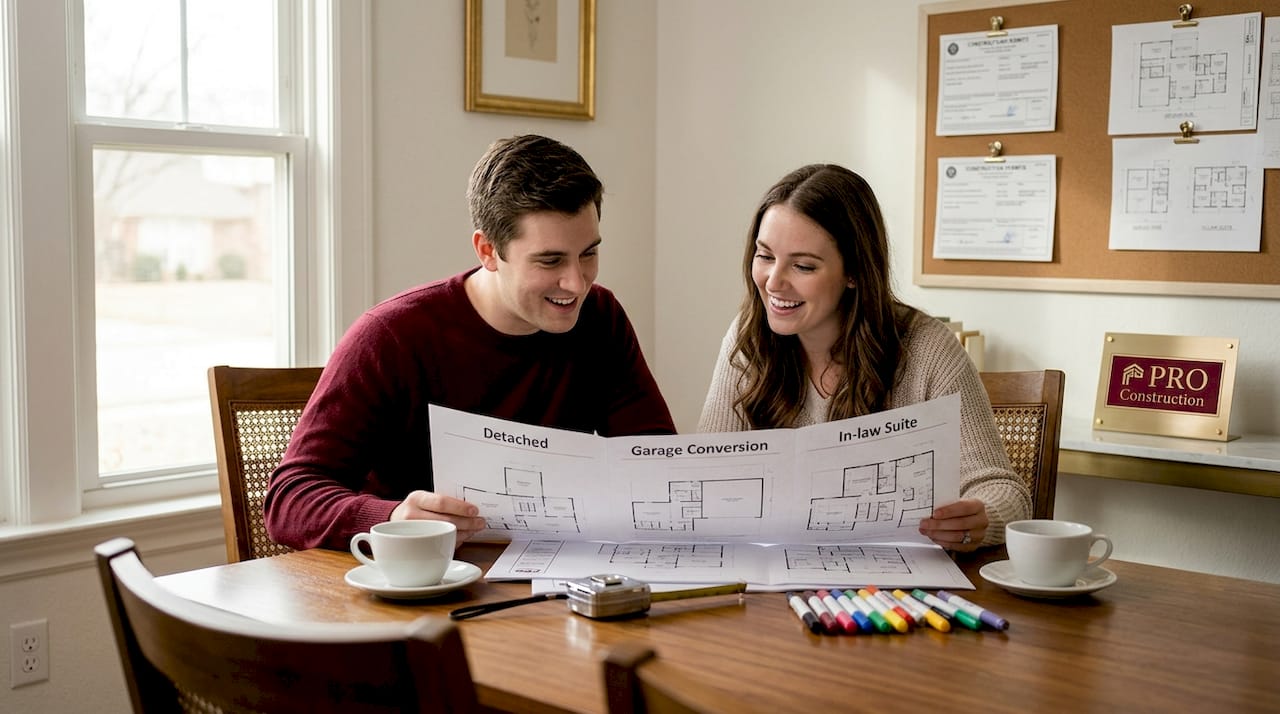
ADU style and function. Are you building a detached backyard cottage, a garage conversion, or an attached in-law suite? Each has different structural demands, cost profiles, and permitting pathways. Write down the square footage you want, the number of bedrooms and bathrooms, and whether you need a full kitchen.
Permit research. Spend an hour on your city's website or call the planning department. Understand what is allowed on your lot before you ask contractors to bid. This prevents wasted conversations with builders who quote projects your zoning does not allow.
Contractor vetting criteria. Before you start collecting bids, know what you are looking for. Use this comparison as your baseline:
| Vetting factor | What to look for | Red flag |
|---|---|---|
| Licensing | Valid Texas contractor license, verified | Cannot provide license number |
| Insurance | General liability plus workers' comp | Only carries one or neither |
| ADU portfolio | Photos and addresses of completed ADUs | Only shows general remodels |
| References | At least 3 recent ADU clients | Refuses to provide references |
| Local experience | Projects in your specific county or city | Only worked in other regions |
Reputable contractors share portfolios, references, and verified licenses without hesitation. If a contractor makes you feel like you are asking too much by requesting these basics, move on.
Step-by-step guide to finding and hiring the right contractor
Once your prep work is done, the actual hiring process becomes much more manageable. Here is how to work through it:
-
Search locally with specificity. Use search terms like "ADU contractor Keller TX" or "accessory dwelling unit builder Fort Worth" rather than generic contractor searches. Check top ADU contractor reviews on Google, the Better Business Bureau, and BuildZoom. A top 1% BuildZoom ranking among Texas contractors is a meaningful signal of consistent quality.
-
Request ADU-specific portfolios. When you contact contractors, ask specifically for examples of completed ADUs, not just home additions or remodels. Hiring ADU builders with a dedicated ADU track record gives you confidence the team has solved the specific problems your project will present.
-
Conduct structured interviews. Do not wing it. Prepare your questions in advance and ask every candidate the same ones so you can compare answers fairly.
-
Evaluate the written bid carefully. A detailed scope of work protects you. Vague bids like "ADU construction, materials included" leave room for disputes later. Look for line-item breakdowns covering demo, foundation, framing, roofing, MEP (mechanical, electrical, plumbing), insulation, drywall, finishes, and permits.
-
Check references directly. Call the references. Ask specifically: Did the project finish on time? Was the final cost close to the original bid? How did the contractor handle problems when they came up?
-
Review the contract before signing. A solid residential construction contract spells out payment schedules, change order procedures, warranty terms, and dispute resolution. Never pay more than 10 to 15 percent upfront.
Pro Tip: When reviewing bids, the lowest number is rarely the best deal. Budget overruns often stem from inexperienced contractors underestimating ADU complexity rather than material costs. A higher bid from a proven ADU specialist almost always costs less in the end.
The questions to ask ADU contractors that matter most are about problems, not successes. Ask: "Tell me about an ADU project that hit a major obstacle. What happened and how did you resolve it?" That answer tells you more than any portfolio photo.
What to expect once construction begins
Hiring the best contractor for ADUs does not mean you step back entirely. Understanding the construction phases helps you stay informed and catch issues early.
A typical ADU build in North Texas moves through these phases:
- Site prep and foundation: Grading, excavation, and slab or pier-and-beam work. Expect an inspection before framing begins.
- Framing and roofing: Structural walls, roof trusses, and sheathing. Another inspection follows.
- Rough MEP: Plumbing, electrical, and HVAC rough-in work. This is the most inspection-heavy phase.
- Insulation and drywall: Covered only after rough MEP passes inspection.
- Finishes and fixtures: Flooring, cabinets, trim, paint, and fixture installation.
- Final inspection and certificate of occupancy: Your contractor should handle scheduling and any required corrections.
Experienced contractors bring established subcontractor networks that enable better scheduling and quality control. They are not calling around for a plumber when yours is needed on a Tuesday morning. They have a trusted team ready.
"Successful ADU builds come down to transparent client-contractor interactions and written scopes of work. When both sides know exactly what is expected, the project moves faster and finishes cleaner." — Proconstructiontx
Clear communication and set expectations reduce missteps and delays during ADU construction. Ask for weekly progress updates in writing, whether by email or a project management app. If something changes, get it documented as a change order before work proceeds.
The hybrid approach: where DIY makes sense
Some homeowners want to reduce costs without taking on the full risk of an owner-builder project. A hybrid model can work, but only if you draw the line in the right place.
Here is a clear breakdown of what is safe to self-manage versus what requires licensed professionals:
| Phase | Licensed contractor required | Homeowner can manage |
|---|---|---|
| Foundation and framing | Yes | No |
| Electrical rough-in | Yes (licensed electrician) | No |
| Plumbing rough-in | Yes (licensed plumber) | No |
| HVAC installation | Yes | No |
| Insulation installation | Recommended | Possible with research |
| Interior painting | No | Yes |
| Landscaping and cleanup | No | Yes |
| Cabinet and fixture installation | No | Yes with experience |
The owner-builder model demands insurance coverage and legal responsibility that most homeowners underestimate. If a subcontractor gets injured on your property and you are acting as the general contractor, you may be personally liable. That risk alone makes full DIY a poor choice for most people.
A hybrid model using licensed contractors for structural and utility work while you handle finish labor is the smarter middle ground. You save on the hours-heavy finish work while keeping the code-critical phases in professional hands.
Pro Tip: If you go hybrid, tell your contractor upfront. A good contractor will help you identify which finish tasks are genuinely safe for a homeowner to handle and which ones look simple but are not.
My take on why ADU experience is worth paying for
I have watched homeowners in North Texas make the same mistake repeatedly. They find a contractor who quotes $20,000 less than everyone else, and they take the bid because the savings feel real. Six months later, they are calling me after a failed inspection, a subcontractor walkout, or a foundation issue that nobody caught because the contractor had never built a standalone ADU before.
Hiring a general contractor experienced in ADUs ensures smoother permitting and builds confidence for first-time ADU investors. That is not a marketing line. It reflects what I have seen on real projects. The permitting process alone, with its specific documentation requirements and municipal timelines, can derail a build for months if the contractor does not know the local system.
The other misconception I hear constantly is that ADU construction experience is just general construction experience applied to a smaller building. It is not. ADUs have unique challenges around utility separation, fire separation requirements between the main home and the unit, and zoning compliance that most generalist builders have never encountered. Paying for genuine ADU construction experience is not a luxury. It is the only way to protect a $130,000-plus investment from avoidable mistakes.
— PRO
How Proconstructiontx helps North Texas homeowners build ADUs right
If you are ready to move from research to action, Proconstructiontx brings over 25 years of residential construction experience in the Keller and Fort Worth area, with a top 1% BuildZoom ranking that reflects a consistent track record of quality. The team handles everything from design and permitting to final inspection, so you are never left managing the complexity alone.
Proconstructiontx specializes in custom ADU design and construction, working directly with North Texas homeowners to navigate local codes, manage licensed subcontractors, and deliver projects that finish on time and on budget. Whether you are building a detached backyard unit or converting an existing structure, the team provides honest guidance from the first consultation through the certificate of occupancy. You can also review the home addition contractor buying guide to understand exactly what to expect before signing anything.
FAQ
What experience should an ADU contractor have?
An ADU contractor should have direct experience managing ADU-specific permitting, structural work, and utility connections in your local municipality. Ask for a portfolio of completed ADUs and references from recent clients in your area.
How much does an ADU typically cost in North Texas?
ADU projects often start around $130,000 for smaller builds, with costs varying based on size, finishes, and site conditions. Setting a realistic budget with a contingency of 15 to 20 percent helps you evaluate bids accurately.
What questions should I ask ADU contractors before hiring?
Ask about ADU-specific projects they have completed locally, how they handle permitting in your city, and how they managed a major problem on a past build. These questions reveal real experience faster than any portfolio photo.
Can I act as my own general contractor for an ADU?
Technically yes in some cases, but the owner-builder model requires you to manage permits, inspections, subcontractors, and liability insurance. Most homeowners find that the trial-and-error delays and legal exposure outweigh the cost savings.
How do I find local ADU contractors in North Texas?
Search for contractors with verified reviews on Google and BuildZoom, specifically filtering for ADU or accessory dwelling unit projects in Tarrant or Denton County. Prioritize contractors who can name specific municipalities where they have completed permitted ADU builds.
Recommended
- Choosing the Best ADU Builder in Fort Worth: A 2026 Homeowner’s Guide - PRO Construction
- Home Addition Contractors in Fort Worth: Your Guide to Expanding Your Space in 2026 - PRO Construction
- Home Addition Permits in North Texas: The Homeowner’s 2026 Guide - PRO Construction
- Residential Construction Contracts: A Homeowner’s Guide for Keller & North Texas - PRO Construction