

Hiring the wrong contractor doesn't just cost money. It costs time, peace of mind, and sometimes the structural integrity of your home. Knowing the qualities of reputable local contractors before you sign anything is the single most effective way to protect your investment. The difference between a smooth renovation and a nightmare project almost always comes down to a few specific, verifiable traits. This guide breaks those traits down so you can spot them, test for them, and make a hiring decision you won't regret.
Table of Contents
- Key Takeaways
- 1. Qualities of reputable local contractors start with verified credentials
- 2. Relevant local experience and a solid reputation
- 3. Clear communication and professional project management
- 4. Timeliness and realistic scheduling
- 5. Warranty offerings and standing behind the work
- 6. Payment transparency and lien protection
- 7. Summary: essential qualities, indicators, and red flags
- What 25 years in North Texas construction actually taught me
- Work with a contractor who checks every box
- FAQ
Key Takeaways
| Point | Details |
|---|---|
| Verify credentials upfront | Always confirm a contractor's license, insurance, and bond before any work begins. |
| Local experience matters | Contractors familiar with your area understand local codes, inspectors, and suppliers. |
| Communication predicts outcomes | How a contractor communicates before the job starts tells you how they'll behave during it. |
| Written documentation protects you | Change orders, contracts, and warranties should always be in writing and signed by both parties. |
| Red flags are real warnings | Vague pricing, pressure to skip permits, and no references are signs to walk away. |
1. Qualities of reputable local contractors start with verified credentials
Before anything else, a reputable contractor must carry three things: a valid license, general liability insurance, and a surety bond. These are not formalities. They are legal protections that stand between you and serious financial exposure.
A license tells you the contractor has met your state or municipality's minimum competency standards. Insurance covers property damage or injuries that occur on your job site. A bond protects you if the contractor fails to complete the work or causes financial harm. Hiring unlicensed or uninsured contractors exposes you to liability for accidents, code violations, and poor workmanship.
Here is what to request and verify before hiring:
- A copy of the contractor's current state or local license
- A certificate of insurance naming you as an additional insured
- Proof of bonding with the bond amount clearly stated
- Verification through your state's contractor licensing board website
Pro Tip: Most state licensing boards have free online lookup tools. Search your contractor's name or license number directly on the board's site to confirm the license is active and has no disciplinary history.
Physical copies of credentials should be verified before hiring. Never accept verbal assurances or screenshots that could be outdated. Requirements vary by state and even by city, so confirm what your local jurisdiction requires for your specific project type.
2. Relevant local experience and a solid reputation
A contractor who has built 50 decks in Florida is not automatically qualified to add a room to your North Texas home. Local experience means familiarity with regional building codes, climate considerations, local inspectors, and trusted subcontractors. That kind of knowledge shortens timelines and reduces costly surprises.
When evaluating experience, look beyond years in business. Look at project types. A contractor who specializes in structural additions brings different skills than one focused on kitchen remodels. Detailed portfolios and references from recent, similar projects are the clearest proof of capability.
Here is how to evaluate experience and reputation thoroughly:
- Ask for three to five references from projects completed in the last two years
- Call those references and ask specifically about timeline adherence and problem resolution
- Request before and after photos of projects similar to yours
- Check their BuildZoom score, Google reviews, and BBB rating
- Search their company name alongside your city to find any local complaints or news
Pro Tip: Match the contractor's specialty to your project type. A general contractor with a track record of home additions in Keller will understand the local permitting timeline and structural requirements far better than a generalist.
Online reviews are useful, but read them with context. A single bad review among dozens of positive ones is different from a pattern of complaints about delays or billing disputes. Patterns tell the real story.
3. Clear communication and professional project management
The way a contractor communicates before you hire them is a direct preview of how they will manage your project. Slow to respond to calls? Vague about pricing? Reluctant to put things in writing? Those habits do not improve once work begins.
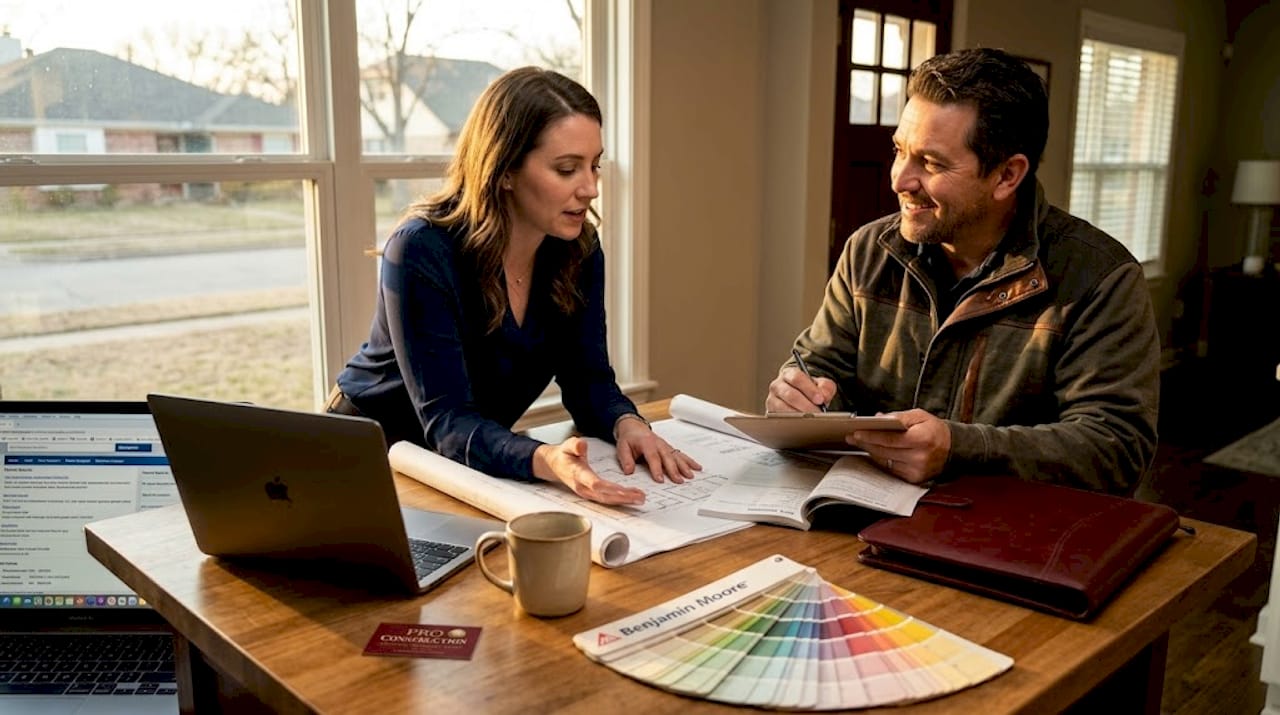
Transparent communication and documented processes from contractors significantly reduce project risk and homeowner stress. Reputable contractors treat communication as part of the job, not an afterthought.
Look for these specific communication practices:
- Written contracts that detail scope, timeline, materials, and payment schedule
- A clear process for handling changes, with written change orders signed before work proceeds
- Regular project updates, whether weekly check-ins or a shared project management tool
- Transparent line-item pricing so you can see exactly what you are paying for
Pro Tip: Ask every contractor you interview this question: "How do you handle a situation where the project scope needs to change?" Their answer will reveal whether they use formal change orders or rely on verbal agreements. Verbal agreements almost always lead to disputes.
Permit management is another communication signal worth watching. Reputable contractors handle the entire permit process, including scheduling city inspections, so you never have to chase down paperwork or risk code violations. If a contractor suggests skipping permits to save time or money, that is a serious red flag.
4. Timeliness and realistic scheduling
A contractor who cannot keep a schedule is a contractor who will cost you more than money. Delays push back your life, extend temporary living arrangements, and often signal deeper organizational problems.
Attributes of trusted contractors include the ability to give you a realistic timeline upfront and then stick to it. The keyword is "realistic." Be cautious of contractors who promise unusually fast completion. That often means they are overcommitted or cutting corners.
Here is what to look for when assessing scheduling reliability:
- Ask how many active projects they are currently managing
- Request a written project schedule with milestones and completion dates
- Ask what their process is when a subcontractor causes a delay
- Confirm material lead times are already factored into the proposed timeline
- Check references specifically about whether projects finished on time
Weather delays and supply chain issues are legitimate. Vague excuses, missed milestone after missed milestone, and poor subcontractor coordination are not. A contractor who builds buffer time into their schedule and communicates proactively about setbacks is far more trustworthy than one who promises perfection and delivers chaos.
5. Warranty offerings and standing behind the work
A contractor who is confident in their craftsmanship offers a warranty. One who is not, often finds reasons to avoid putting one in writing. Contractor warranties should cover labor defects for at least one year, with clear documentation of what is included and what is excluded.
Understanding warranty terms before you sign the contract is part of the local contractor vetting process. Ask specifically whether the warranty covers labor separately from materials, since manufacturer warranties on materials are different from the contractor's workmanship guarantee. A reputable contractor will explain this distinction without hesitation.
What makes a contractor reputable in this area is simple: they stand behind their work after the check clears. Ask references whether the contractor returned promptly to address any post-completion issues. That follow-through is one of the clearest indicators of long-term integrity.
6. Payment transparency and lien protection
Payment structure tells you a great deal about a contractor's professionalism. Reputable contractors do not ask for large upfront payments, and they provide clear documentation at every payment milestone.
One area most homeowners overlook is lien waivers. Conditional lien waivers protect owners until payment clears, while unconditional waivers relinquish lien rights upon signing. Understanding this distinction matters. If a contractor asks you to sign an unconditional waiver before funds have cleared, that is a significant financial risk.
Use conditional waivers for progress payments and only move to unconditional waivers after confirming payment has been received. A contractor who understands this process and uses it correctly is demonstrating financial professionalism that protects both parties. For more on how contracts and payment terms work together, the homeowner's guide to residential contracts is worth reading before you negotiate.
7. Summary: essential qualities, indicators, and red flags
Use this table as a quick reference when comparing contractors during your vetting process.
| Quality | What to look for | Red flag |
|---|---|---|
| Licensing and insurance | Current license, liability coverage, active bond | Cannot provide physical copies or verification |
| Local experience | Portfolio of similar local projects, local references | Only national or distant project examples |
| Communication | Written contracts, change order process, regular updates | Vague answers, verbal-only agreements |
| Timeliness | Written schedule with milestones, buffer time included | Unrealistically fast promises, no milestone plan |
| Warranty | Written labor warranty of at least one year | Refuses to put warranty terms in writing |
| Payment structure | Milestone-based payments, conditional lien waivers | Large upfront deposit, pressure to skip documentation |
Finding reliable contractors becomes much easier when you know exactly what to look for and what to avoid. This table gives you a fast way to score each candidate you interview.
What 25 years in North Texas construction actually taught me
I've seen homeowners make the same mistakes repeatedly, and almost none of them are about credentials. Most people now know to ask for a license. What they miss is the behavioral evidence that tells you whether a contractor is actually trustworthy.
In my experience, the most revealing moment in any contractor conversation is when something goes wrong during the estimate process. Maybe a measurement is off, or a scope item turns out to be more complex than expected. How a contractor handles that moment tells you everything. Do they own it and adjust? Or do they deflect and minimize? The contractors who acknowledge problems early and communicate clearly about them are the ones who deliver.
I've also learned that homeowners often confuse confidence with competence. A contractor who speaks with authority and moves fast through the estimate process can feel reassuring. But speed through paperwork is not a quality. It is a shortcut. The contractors I trust most are the ones who slow down, ask questions about your goals, and take time to explain their process.
My honest take: demand a written change order process before you sign anything. Formal written change orders for any scope change protect you legally and financially. Contractors who resist this are telling you something important about how they plan to manage your project.
— PRO
Work with a contractor who checks every box
If you've been searching for reputable local contractors in North Texas and keep running into vague proposals, missing credentials, or contractors who disappear after the deposit clears, PRO Construction was built to be the answer to that problem.
With over 25 years of experience in North Texas and a top 1% ranking on BuildZoom, PRO Construction brings verified credentials, transparent communication, and structured project management to every job. Whether you're planning a home addition, a garage build, or a structural renovation, the team handles permits, inspections, and subcontractor coordination so you don't have to.
Homeowners in Keller and the surrounding North Texas area can explore home addition services and ask about current discounts. PRO Construction's process is built around the qualities covered in this article, and every client gets the documentation, the timeline, and the follow-through that reputable work requires.
FAQ
What are the most important qualities of reputable local contractors?
The most critical qualities are valid licensing, current insurance, a surety bond, local project experience, and a clear written contract process. Contractors who communicate proactively and provide written change orders consistently deliver better outcomes.
How do I verify a contractor's license before hiring?
Visit your state's contractor licensing board website and search the contractor's name or license number directly. Always request a physical copy of the license and confirm it is active and free of disciplinary actions.
What should a contractor's warranty cover?
A contractor's warranty should cover defects in labor for at least one year, with terms documented in the contract. Ask whether the labor warranty is separate from any manufacturer warranties on materials, since these are different protections.
Why do written change orders matter so much?
Written change orders are legally required in some states and protect both parties when project scope changes. Verbal approvals for changes are a leading cause of billing disputes and unfinished work.
What is a conditional lien waiver and why should homeowners use one?
A conditional lien waiver protects your payment rights until funds have actually cleared. Use conditional waivers for progress payments and only accept unconditional waivers after confirming the payment has been received by the contractor.
Recommended
- Residential Construction Contracts: A Homeowner’s Guide for Keller & North Texas - PRO Construction
- PRO Construction: Driving Quality Home - PRO Construction
- Design Build Project Management: The Homeowner’s Guide to Stress-Free Construction - PRO Construction
- How to Choose a Structural Renovation Contractor in Fort Worth TX: A Homeowner’s Guide - PRO Construction