

A structural engineer is a licensed professional who calculates and certifies that a building's load-bearing systems can safely support the forces placed on them. When you plan a home addition, this expertise is not optional for most projects. Removing walls, adding a second story, or extending a foundation all require PE-stamped structural plans that satisfy your local building department. Knowing when to hire a structural engineer for a home addition, what to pay, and how to vet candidates will save you from permit delays, costly redesigns, and structural failures that no amount of drywall can hide.
When do you need to hire a structural engineer for a home addition?
Structural engineering is required whenever you modify load-bearing elements or exceed the prescriptive limits set by residential building codes. Prescriptive codes, like the IRC (International Residential Code), give builders pre-approved sizing tables for standard framing. The moment your project steps outside those tables, a licensed Professional Engineer must sign and seal the drawings.
The most common triggers for mandatory structural engineering on a home addition include:
- Removing or modifying load-bearing walls to create open-concept spaces. The open concept dream almost always involves transferring roof and floor loads to new beams, which requires engineered calculations.
- Adding a second story above an existing single-story structure. The existing foundation and wall framing must be evaluated for the added weight.
- Unusual geometry or cantilevers that fall outside standard span tables.
- Foundation modifications, including new footings, grade beams, or pier-and-beam extensions.
- Complex open spans exceeding the limits in prescriptive code tables, typically anything over 20 feet for floor or roof framing.
The timing of your engineer's involvement matters as much as the involvement itself. Early structural engineer engagement reduces plan review resubmissions and prevents the expensive scenario where demolition has already started before a permit is issued. Bring your engineer in during the design phase, before any walls come down.
Pro Tip: Provide your engineer with existing architectural plans, prior permit records, and any soil reports upfront. Supplying this documentation at the start speeds up production of permit-ready drawings and reduces back-and-forth revisions.

How to choose a structural engineer for your home addition
Choosing the right structural engineer requires more than a Google search for "find structural engineers near me." You need to verify credentials, assess residential experience, and confirm the scope of services before signing anything. Here is a step-by-step process.
- Verify PE licensure. Every structural engineer working on permitted projects must hold a Professional Engineer license in your state. State licensing boards offer online verification tools. In Texas, the Texas Board of Professional Engineers and Land Surveyors maintains a public license lookup. Never hire an engineer who cannot provide a license number you can independently confirm. You can also review the Texas contractor license verification process for additional guidance on checking professional credentials.
- Confirm residential addition experience. Commercial structural engineers and residential structural engineers work in very different code environments. Ask specifically how many room additions and second-story projects they have completed in the past two years.
- Clarify the full scope of services. A complete engagement should include initial consultation, structural calculations, permit-ready sealed drawings, response to plan review comments, and at least one site visit during framing. Structural engineers also provide ongoing consultation during construction to answer contractor questions and address field adjustments. Confirm all of this is in the contract.
- Ask about turnaround times. Room addition structural plans typically take 10 to 14 days to produce. If an engineer quotes you two days for a complex addition, that is a red flag, not a selling point.
- Request a fixed-fee proposal. Hourly billing on structural engineering projects creates budget uncertainty. A fixed-fee proposal with clearly listed deliverables protects you from scope creep and surprise invoices.
Red flags to watch for: engineers who offer only calculations without sealed drawings, unwillingness to share license numbers, vague deliverable descriptions, and quotes significantly below the market range without explanation. Hiring based solely on price leads to scope gaps that cause permit resubmittals and construction delays.
Pro Tip: During your interview, ask the engineer how they handle plan review comments from the building department. A confident, experienced engineer will describe a clear revision and resubmittal process. Vague answers here predict problems later.
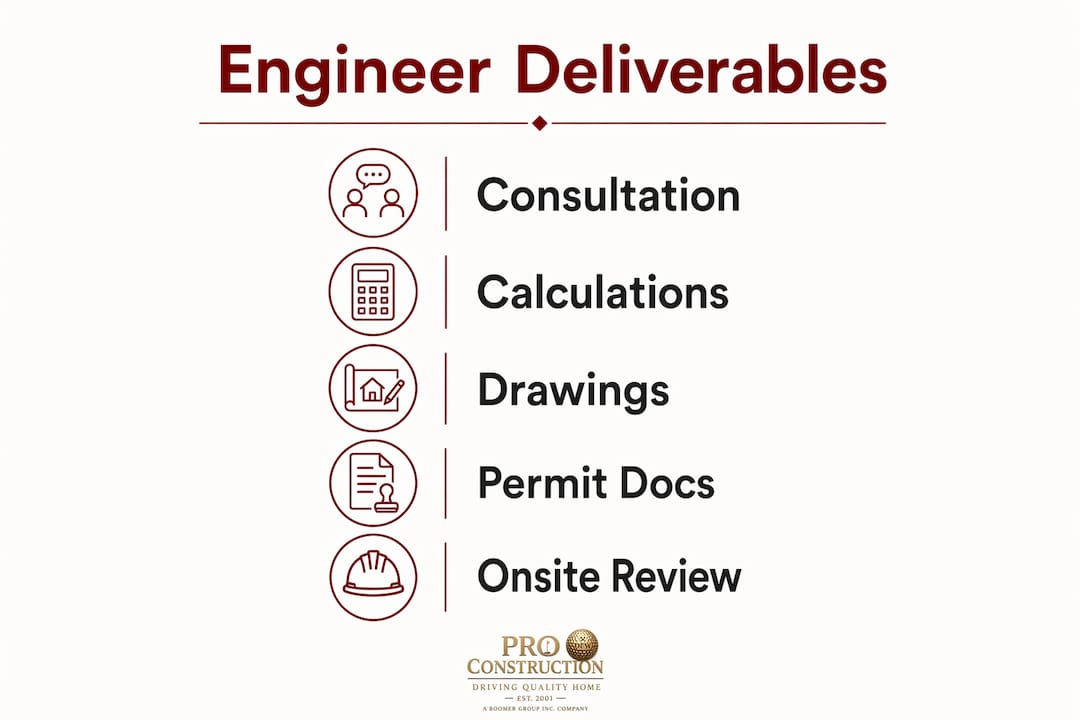
What deliverables does a structural engineer provide?
Understanding what you are paying for prevents misunderstandings and protects your permit timeline. A full structural engineering engagement for a home addition produces a specific set of documents.
| Deliverable | Description | Typical timeline |
|---|---|---|
| Structural calculations | Load calculations for beams, columns, and foundations | 3 to 7 days |
| PE-stamped structural drawings | Sealed plans covering framing, shear walls, and connections | 10 to 14 days |
| Foundation design | Footing sizes, reinforcement schedules, and bearing details | Included in drawings |
| Permit submittal package | Sealed sheet set meeting municipal plan review requirements | Delivered with drawings |
| Plan review response | Written responses and revised drawings addressing city comments | 3 to 5 days per cycle |
| Construction consultation | Field visits and contractor support during framing and installation | As needed |
PE-stamped structural drawings cover foundations, framing members, shear walls, and connection details. These are not optional additions to the permit package. They are the permit package for any project that exceeds prescriptive code limits. A set of calculations without sealed drawings is incomplete and will trigger a resubmittal request from your building department.
Permit-ready drawings with complete scope details are what separate a smooth permit approval from a months-long back-and-forth with the city. Ask your engineer to confirm that the sealed sheet set addresses all items on your municipality's structural plan review checklist before submission.
How much does it cost to hire a structural engineer for a home addition?
Structural engineering costs for home additions typically range from $1,500 to $12,000 depending on project scope and complexity. That range reflects the difference between a straightforward room addition on a slab and a full second-story addition with complex framing and foundation upgrades.
The cost breakdown by service type gives you a clearer picture for budgeting:
| Service | Typical cost range |
|---|---|
| Initial consultation | $200 to $1,000 |
| Structural calculations and plan preparation | $800 to $4,000 |
| Permit submittal and plan review support | $300 to $2,000 |
| Field inspections and construction consultation | $200 to $2,000 |
| Plan review revision cycles | $150 to $500 per cycle |
Regional variation affects pricing significantly. Engineers in high cost-of-living markets like Orange County or New York City charge more than those in North Texas markets like Keller or Fort Worth. Project complexity, the number of structural systems involved, and the engineer's experience level all push costs up or down within these ranges.
Three practices help you control your structural engineer cost for an addition. First, define your project scope in writing before requesting quotes. Vague scope descriptions produce vague bids that expand later. Second, compare at least three bids with clearly listed deliverables before selecting an engineer. Third, request fixed-fee proposals rather than hourly estimates. Fixed fees align the engineer's incentives with yours: they benefit from working efficiently rather than billing more hours.
Understanding permit requirements for home additions also helps you anticipate the full cost picture, since permit fees and plan review cycles are separate from engineering fees but directly connected to the quality of the engineer's work.
Key takeaways
Hiring a structural engineer for your home addition is a non-negotiable investment when load-bearing systems, foundations, or complex framing are involved, and the right engineer delivers sealed plans, permit support, and construction consultation that protect your timeline and your home.
| Point | Details |
|---|---|
| Know when engineering is required | Load-bearing modifications, second-story additions, and unusual geometry all require PE-stamped plans. |
| Verify licensure before hiring | Confirm PE license numbers through your state licensing board before signing any contract. |
| Demand a complete scope | Your contract must include sealed drawings, permit submittal, plan review response, and construction consultation. |
| Budget $1,500 to $12,000 | Costs vary by scope and region; get three fixed-fee bids with itemized deliverables to compare accurately. |
| Involve engineers early | Bringing your engineer in during design prevents permit delays and avoids costly mid-construction surprises. |
What 25 years of additions taught me about structural engineers
Most homeowners treat the structural engineer as a bureaucratic hurdle. They hire one because the permit office requires it, hand over the minimum information, and then wonder why the process drags. That framing gets the relationship exactly backward.
The engineers who deliver the smoothest projects are the ones who get called before the architect finalizes the floor plan, not after. When a structural engineer reviews the design early, they catch load path problems that would otherwise require expensive redesigns at the permit stage. At PRO Construction, we have seen projects lose six to eight weeks because a wall was removed on paper before anyone confirmed the beam size above it. That is not a permit problem. It is a sequencing problem.
The other pattern I see constantly: homeowners get a low bid from an engineer who provides calculations only, no sealed drawings. That bid looks like a deal until the building department rejects the submittal and the homeowner has to pay a second engineer to produce a complete sealed set. The scope gaps from low-price bids cost more to fix than the savings were worth.
My honest advice is to treat your structural engineer the way you treat your general contractor. Ask for references. Read the contract carefully. Confirm that clear roles and communication are built into the engagement from day one. The engineers who answer contractor questions promptly during framing are the ones who keep projects on schedule. The ones who disappear after delivering drawings create problems that fall on everyone else to solve.
— PRO
How PRO Construction coordinates structural engineering for your addition

PRO Construction has spent over 25 years building home additions across North Texas, and structural engineering coordination is built into every project we manage. We work with licensed structural engineers who produce permit-ready, PE-stamped plans aligned with Texas building codes, so your project moves from design to approved permit without unnecessary delays. Our team manages the full process: scope definition, engineer selection, permit submittal, and construction oversight. If you are ready to expand your home with a contractor who handles the details, explore our home addition services or learn more about additions in Fort Worth to see how we approach your project from the ground up.
FAQ
When is a structural engineer required for a home addition?
A structural engineer is required when your addition involves load-bearing wall modifications, foundation changes, second-story construction, or framing that exceeds prescriptive IRC code limits. Building departments mandate PE-stamped plans for any of these conditions before issuing a permit.
What does a structural engineer charge for a home addition?
Structural engineer costs for a home addition typically range from $1,500 to $12,000, covering consultation, calculations, sealed drawings, permit submittal, and construction consultation. Scope complexity and regional market rates are the two biggest factors affecting where your project falls in that range.
How do I find and vet a qualified structural engineer near me?
Search for licensed structural engineers in your area and verify their PE license through your state licensing board before hiring. Confirm they have residential addition experience, ask for a fixed-fee proposal with itemized deliverables, and check that sealed drawings and plan review support are included in the scope.
What questions should I ask a structural engineer before hiring?
Ask about their residential addition experience, typical turnaround times, how they handle plan review comments, and whether their fee includes sealed drawings and construction consultation. An engineer who cannot answer these questions clearly is not ready to manage your permit process.
How long does structural engineering take for a home addition?
Simple structural calculations take 3 to 7 days, while complete room addition structural plans with sealed drawings typically take 10 to 14 days. Plan review response cycles add another 3 to 5 days per round, so build at least three to four weeks of engineering time into your overall project schedule.
Recommended
- Home Additions in Keller, TX: The Structural Expert’s Guide to Expanding Your Space - PRO Construction
- How to Choose a Home Addition Contractor: The 2026 North Texas Homeowner’s Guide
- Home Addition Contractor in Keller, TX: The 2026 Homeowner’s Buying Guide - PRO Construction
- Structural Renovation Services in Tarrant County: The Homeowner’s Guide - PRO Construction