
Most buyers assume a freshly built or recently renovated home is a quality home. That assumption costs people thousands of dollars every year. What is residential construction quality, really? The industry term is construction quality assurance, and it covers far more than paint colors and cabinet finishes. Quality is defined by documented standards, systematic processes, and verifiable workmanship tolerances. Understanding this distinction before you buy, build, or renovate puts you in a fundamentally different position than the buyer who trusts their eyes alone.
Table of Contents
- Key takeaways
- What residential construction quality really means
- How construction quality is evaluated
- Common quality gaps that come back to haunt buyers
- Practical ways to assess and protect construction quality
- My take on quality beyond the surface
- Build with confidence in North Texas
- FAQ
Key takeaways
| Point | Details |
|---|---|
| Quality is process, not appearance | Residential construction quality is defined by documented standards and workmanship checks, not just visual finish. |
| QA and QC are different things | Quality assurance prevents defects upfront; quality control identifies and fixes them after work begins. |
| Building codes are the floor, not the ceiling | Code compliance sets minimum requirements; true quality in home construction exceeds those minimums. |
| Inspections have real limits | Standard home inspections are visual and non-invasive. They cannot reveal hidden defects behind walls or under slabs. |
| Early-stage details determine outcomes | Waterproofing, insulation, and drainage decisions made early on are the most common root causes of latent defects. |
What residential construction quality really means
The phrase "quality construction" gets used constantly in marketing, but it rarely comes with a definition. In practice, residential construction quality is built on three interconnected pillars: documented standards, material specifications, and workmanship tolerances. Remove any one of those pillars and you are left with guesswork.
A standard scope document spells out exactly what work will be done, to what specification, and within what acceptable range of deviation. QA is planned before construction starts, while quality control (QC) verifies that the work matches those standards during and after execution. This distinction matters enormously for homeowners.
Here is a practical way to think about it:
- Quality assurance (QA) is proactive. It asks, "What are our standards, and how do we prevent deviations before work begins?"
- Quality control (QC) is reactive. It asks, "Does the finished work match the standard, and what needs to be corrected?"
QA focuses on preventing defects; QC focuses on identifying and fixing them. A builder who skips QA and relies only on QC is essentially waiting for problems to appear rather than designing a process to stop them.
Building codes are the legal baseline in residential building standards. But passing inspection does not mean exceptional quality. Code compliance is distinct from workmanship quality; you need documented QA processes to demonstrate that a build exceeds the minimum. A home can pass every code inspection and still have insulation installed with gaps, flashing done incorrectly, or drainage graded the wrong direction.
Pro Tip: When interviewing a contractor, ask to see a written scope of work that includes material specifications and workmanship tolerances. If they cannot produce one, that tells you something important about how they manage quality.
How construction quality is evaluated
Understanding how quality in home construction gets assessed helps you ask better questions and hire better people. The starting point for most buyers is the standard home inspection, and that is also where a lot of confusion begins.
Home inspections are visual and non-invasive. Inspectors do not perform destructive testing, do not open walls, and cannot determine remaining lifespan of systems. They will tell you the roof looks aged or that there is moisture staining near the foundation. What they cannot tell you is whether the vapor barrier behind the drywall was installed correctly three years ago.
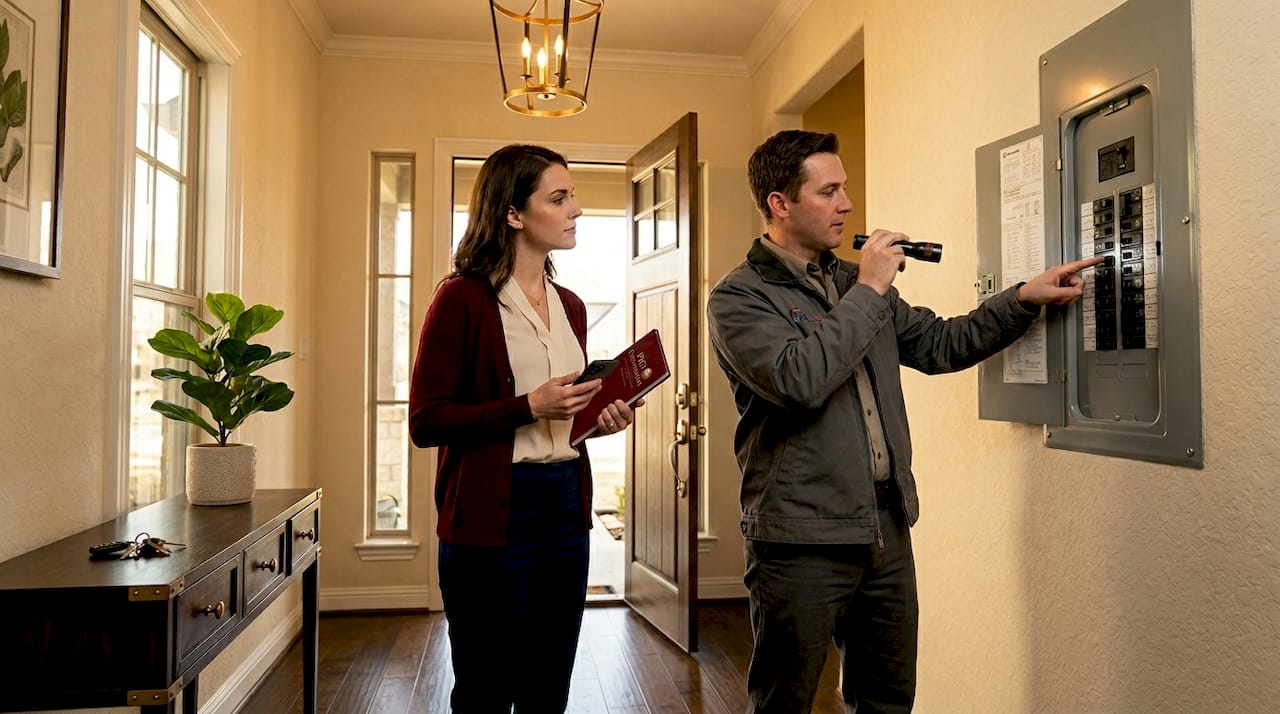
That is not a criticism of inspectors. It is a description of what the tool is designed to do. The problem arises when buyers treat a passing home inspection as a quality certificate.
For a more complete picture, you need targeted specialists:
- A structural engineer for foundation and framing concerns
- A roofing specialist for anything beyond surface-level roof inspection findings
- A moisture or mold specialist when there is any evidence of water intrusion
- An HVAC technician to assess system performance and installation quality
Beyond inspections, there are formal quality rating systems worth knowing. UAD quality ratings (Q1 through Q6) describe a home's materials and craftsmanship independently of price or location. Q1 represents the highest quality of custom construction; Q6 represents the lowest. These ratings are used in appraisals and are based strictly on built features and workmanship, not market conditions.
One nuance many buyers miss: one high-end feature does not elevate overall quality rating. A kitchen with commercial-grade appliances does not raise a home's rating if the framing, insulation, and waterproofing are mediocre. Quality ratings require consistency across all components.
Common quality gaps that come back to haunt buyers
The most expensive residential construction problems are almost never the ones you can see on move-in day. They develop slowly, hidden behind drywall or under roofing materials, until they become undeniable and costly.
Early-stage details like waterproofing, insulation quality, and drainage are the most common root causes of latent defects that affect durability and occupant safety. Latent defects are problems that exist at the time of construction but only become visible months or years later.
Here are the most frequent culprits:
- Waterproofing failures. Improper membrane installation or missing flashing at roof penetrations creates pathways for water. You will not see it until mold appears or a ceiling stains.
- Insulation voids. Insulation that is compressed, miscut, or simply not installed behind electrical boxes creates thermal bridges and moisture accumulation points.
- Inadequate roof ventilation. Without proper airflow, heat and moisture build up in the attic, accelerating sheathing decay and reducing shingle life significantly.
- Poor drainage grading. Soil graded toward the foundation rather than away from it pushes water against the foundation wall, leading to seepage and eventual structural movement.
- Subfloor gaps and squeaks. Subfloor panels not properly fastened or glued create movement that worsens over time, especially in humid climates.
Homeowners wrongly assume new homes are defect-free, but thorough quality verification must include concealed layers and systems, not just surface finishes.
Pro Tip: For a new build, schedule stage inspections at framing, rough-in, and pre-drywall phases. Once the walls close, your window to catch installation errors closes with them.
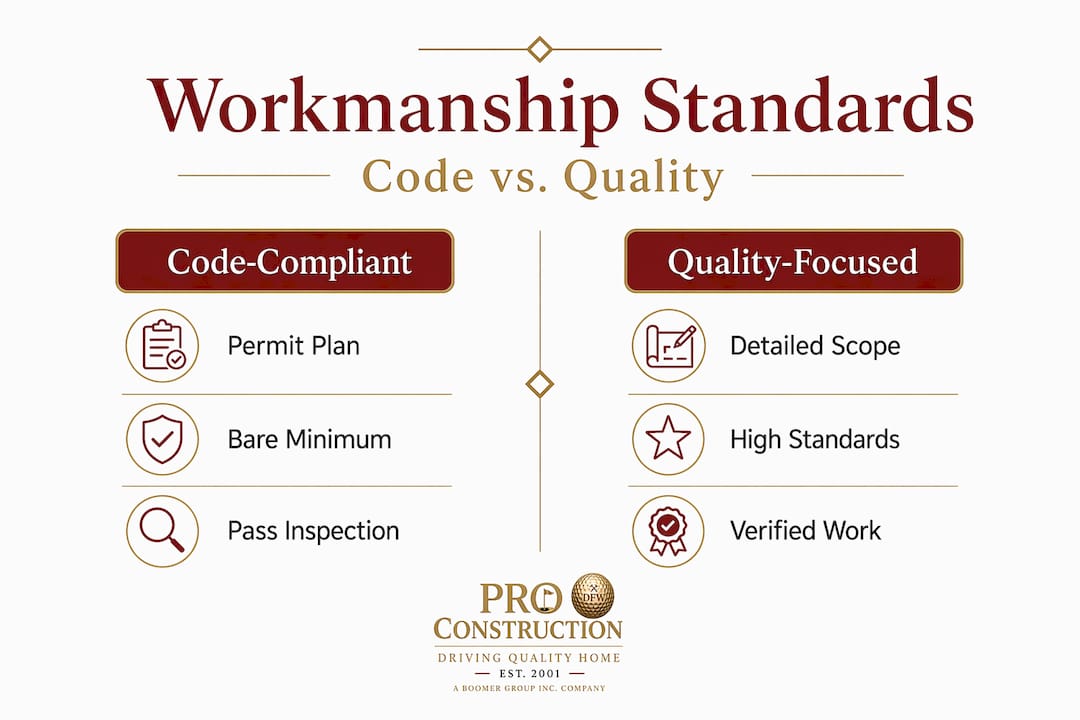
There is also an important distinction between code-level work and higher workmanship standards. Quality disputes resolve more smoothly when defects are described via published workmanship tolerances rather than subjective judgments. If your contract references specific standards, you have a measurable benchmark. If it just says "quality work," you are negotiating opinions.
Practical ways to assess and protect construction quality
Knowing the theory is useful. Knowing what to actually do with that knowledge is what protects your investment. These residential construction best practices apply whether you are buying an existing home, overseeing a renovation, or managing a new build.
Start with documentation. Before any work begins, request:
- A written scope of work with specific materials called out by brand, grade, and specification
- A list of subcontractors and their licensing credentials
- A QA checklist the builder uses at each phase of construction
- References from projects completed in the past 12 to 24 months
The table below shows what separates a quality-focused contractor from one who is simply code-compliant:
| Factor | Code-compliant only | Quality-focused |
|---|---|---|
| Documentation | Permit drawings only | Full scope, specs, and QA checklists |
| Inspections | Municipal inspections at key phases | Municipal plus independent third-party checks |
| Materials | Meets minimum spec | Specifies grade, brand, and performance standard |
| Communication | Updates when asked | Proactive milestone reporting |
| Issue resolution | Fix when flagged | Track, document, and correct proactively |
When measuring home construction quality on a project you are overseeing, ask your contractor directly: "What happens when your crew identifies an issue mid-build?" A quality-focused builder has a documented process. A builder who gives you a vague answer is telling you that QA ownership does not have a clear home on their team, and when no one owns defined standards, quality becomes inconsistent and reactive.
Also know how to spot red flags during the hiring process. Look into signs of a reliable contractor before signing anything. Unlicensed work, unusually low bids, and reluctance to provide references are all warning signals worth taking seriously. For investors especially, the cost of a bad contractor compounds across multiple properties.
Licensed residential contractors are bound by state-level building standards and carry the liability insurance that protects you if something goes wrong. Licensing is not a guarantee of exceptional quality, but its absence removes a significant layer of accountability.
My take on quality beyond the surface
After 25 years of building in North Texas, I have learned one thing that most buyers figure out the hard way: the most beautiful home and the best-built home are not always the same thing.
I have walked through finished homes with stunning tile work and custom millwork where the attic had no ridge vent, the exterior walls were insulated with compressed batts, and the drainage was pitched directly at the foundation. Gorgeous to look at. A disaster waiting to happen.
The buyers who ask me, "How does it look?" are asking the wrong question. The buyers who ask, "What's your QA process for waterproofing and framing?" are the ones who sleep soundly after closing.
What I have found actually works is what looks good at the end matters less than meeting a written target with systematic checks at every stage. Our team at PRO Construction uses stage-by-stage checklists, documents every material specification, and keeps clients informed at each milestone. Not because it is required, but because it is the only way to build something that holds up ten years later.
My honest advice: stop trusting your eyes and start trusting documentation. Ask for the scope. Ask for the QA checklist. Ask what happens when something is not right. If the answer is solid, you are working with someone who understands what construction quality actually means.
— PRO
Build with confidence in North Texas
If you are planning a home addition or major renovation in the Keller or Fort Worth area, the foundation of a great outcome is choosing a team that treats quality as a process, not a promise.
PRO Construction brings over 25 years of experience to every project, with a top 1% ranking on BuildZoom and a track record of transparent communication from the first conversation to the final walkthrough. Whether you are adding square footage or transforming an existing space, you deserve a builder who can show you the scope, the specifications, and the quality checks before a single nail goes in. Explore home addition services in Keller to see how PRO Construction delivers quality you can verify, not just admire.
FAQ
What is residential construction quality in simple terms?
Residential construction quality refers to how well a home is built relative to documented standards, including material specifications, workmanship tolerances, and code compliance. It is defined by process and measurement, not appearances alone.
How do I assess construction quality before buying a home?
Start with a general home inspection, then hire specialists for roofing, structural, HVAC, and moisture concerns if needed. Requesting builder documentation, such as scopes of work and QA checklists, also reveals how quality was managed during construction.
What is the difference between QA and QC in home construction?
Quality assurance (QA) is proactive and happens before work begins; it defines the standards and processes meant to prevent defects. Quality control (QC) is reactive and involves inspecting completed work to catch and fix problems.
Why do new homes still have quality problems?
New homes can have latent defects because critical systems like waterproofing, insulation, and drainage are installed early and concealed behind finishes. Without stage inspections and documented QA processes, these issues often go undetected until they cause visible damage.
What do UAD quality ratings mean for homeowners?
UAD quality ratings (Q1 through Q6) are used in appraisals to score a home's materials and craftsmanship on an absolute scale, independent of location or price. A higher rating reflects consistent quality across all building components, not just a few standout features.
Recommended
- PRO Construction: Driving Quality Home - PRO Construction
- Design Build Project Management: The Homeowner’s Guide to Stress-Free Construction - PRO Construction
- Qualities of Reputable Local Contractors: A Homeowner's Guide
- Residential Construction Contracts: A Homeowner’s Guide for Keller & North Texas - PRO Construction