
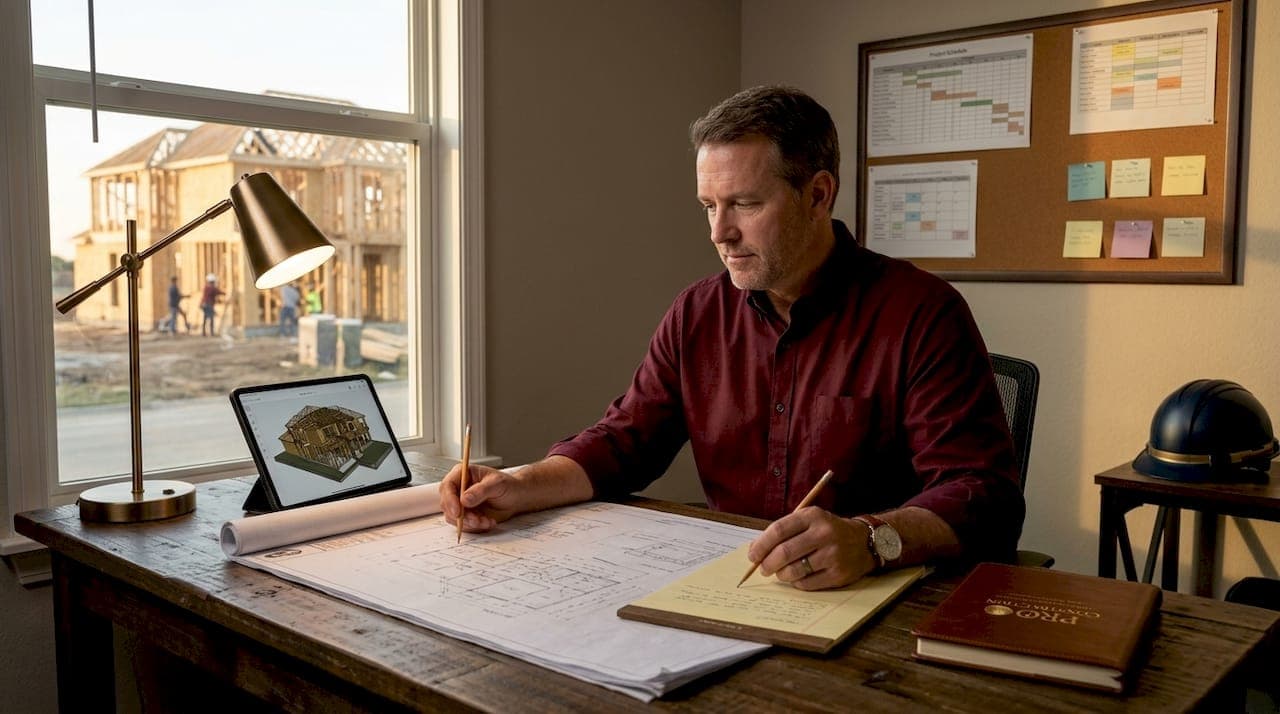
A construction project manager is the single accountable leader responsible for delivering a building project on time, within budget, and to the agreed quality and safety standards. This role sits at the center of every major decision, from the first budget estimate through the final punch list. Whether you are planning a home addition in North Texas or overseeing a garage build, understanding what a project manager actually does will help you ask better questions, avoid costly surprises, and get the outcome you paid for. PRO Construction has managed residential projects for over 25 years, and the difference between a smooth build and a stressful one almost always comes down to how well the project manager role is filled.
What does a construction project manager actually do?
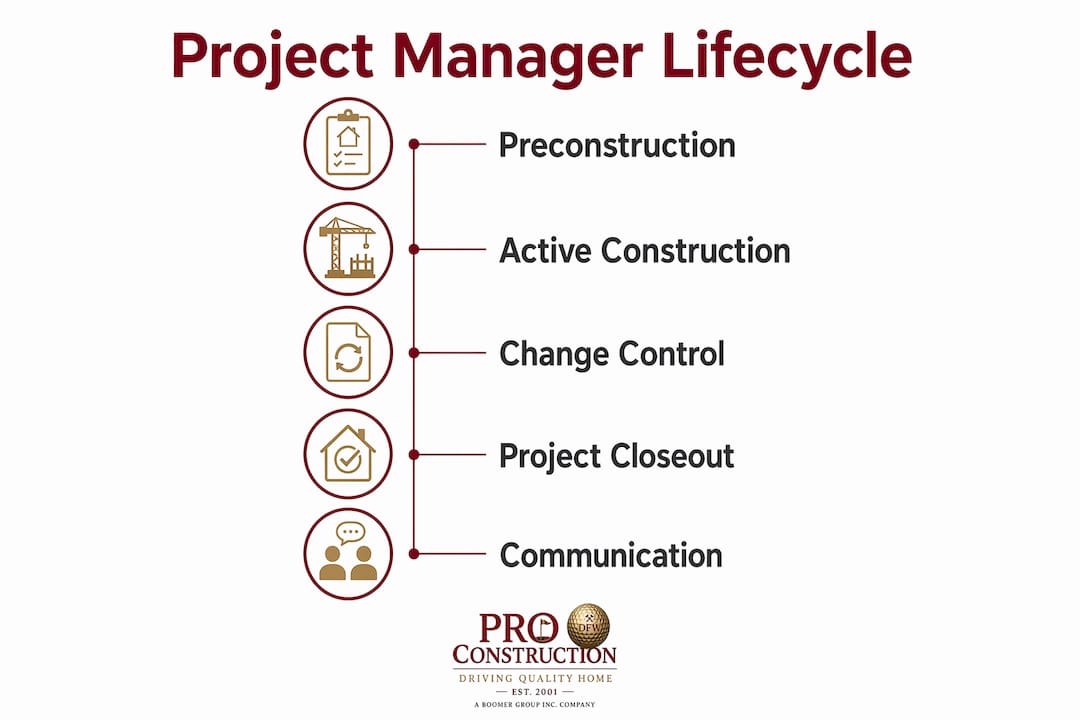
The role of project manager in construction covers every phase of the project lifecycle, from preconstruction planning through final handover. This is not a coordinator who schedules meetings. This is the person who owns the outcome.
Preconstruction: where success is set up or lost
Before a single shovel breaks ground, the project manager defines the scope, builds the budget, identifies procurement risks, and establishes the baseline schedule. A missed assumption at this stage becomes a change order later, and change orders cost money. The PM also reviews contracts, selects subcontractors, and aligns the design team with what can realistically be built within the owner's budget.
Active construction: controlling the moving parts
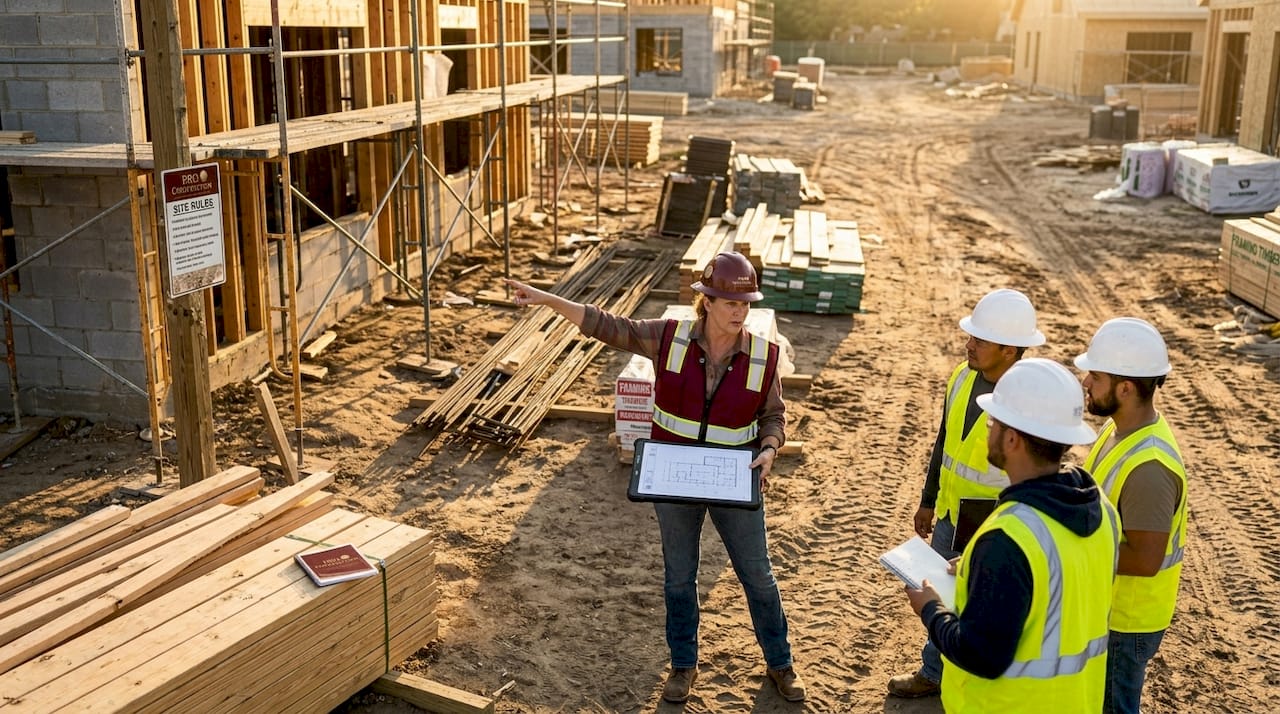
During construction, the PM monitors schedule progress, reviews submittals, processes requests for information (RFIs), and conducts quality inspections. Safety enforcement is a non-negotiable duty. Construction accounts for roughly 20% of all U.S. worker fatalities, which means OSHA compliance is not a formality but a core PM responsibility. The PM also runs weekly coordination meetings to keep subcontractors aligned and catch problems before they compound.
Change orders and cost control
Change orders are one of the most misunderstood parts of residential construction. The PM manages the full change order process, including pricing, documentation, negotiation, and formal approval before any additional work begins. Some projects also use Change Directives to authorize work ahead of formal approval when schedule pressure demands it. The PM tracks all cost and time commitments created by those directives so nothing falls through the cracks.
Project closeout
Closeout is where many projects drag on unnecessarily. The PM drives the punch list, coordinates final inspections, secures the certificate of occupancy, and assembles warranty documentation. A PM who manages closeout well hands you a finished project with zero loose ends.
Pro Tip: Ask your PM for a written closeout checklist at the start of the project. Knowing the finish line criteria from day one keeps everyone accountable.
How does a project manager differ from a site superintendent?
Many homeowners assume the person they see on site every day is running the project. That person is usually the superintendent, and the distinction matters.
The PM holds contractual authority, meaning they sign subcontractor agreements, approve change orders, and are accountable to you for budget and schedule. The superintendent holds operational authority, directing field crews, managing daily sequencing, and enforcing safety procedures on the ground. Both roles are necessary, but they answer different questions.
| Responsibility | Project manager | Site superintendent |
|---|---|---|
| Contract management | Signs and enforces subcontractor agreements | No contractual authority |
| Budget control | Tracks costs, approves expenditures | No direct budget role |
| Schedule governance | Maintains baseline schedule, flags delays | Executes short-interval lookahead schedule |
| Daily field operations | Not typically on site daily | Directs crews and sequencing every day |
| Quality and safety | Sets standards and conducts inspections | Enforces standards in real time on site |
| Owner communication | Primary point of contact for all decisions | Reports to PM, not directly to owner |
The superintendent directs field crews and executes the short-interval lookahead schedule, while the PM governs the overall project against the contract. When these two roles communicate well, problems get solved at the field level before they escalate into budget or schedule impacts. When they do not, you end up paying for the gap.
- If a subcontractor is underperforming, the PM decides whether to issue a formal notice or replace them. The superintendent manages the daily work until that decision is made.
- If a material delivery is late, the superintendent resequences the crew. The PM updates the schedule and assesses whether a delay claim is warranted.
- If you want to add a window, you talk to the PM. The superintendent does not have authority to approve scope changes.
Understanding this split helps you direct your questions to the right person and avoid the frustration of getting conflicting answers.
What skills and tools do project managers use to keep projects on track?
Effective construction PMs combine leadership, technical knowledge, and communication discipline to control cost, schedule, and risk simultaneously. No single tool replaces good judgment, but the right tools make good judgment faster and more consistent.
Scheduling and planning tools are the backbone of schedule control. PMs use Critical Path Method (CPM) scheduling software such as Oracle Primavera P6 or Microsoft Project to model the project timeline and identify which tasks directly affect the completion date. Updating a baseline schedule formally rather than just adjusting a Gantt chart is what separates professional schedule management from wishful thinking. Formal updates create a defensible record if delay claims arise.
Budget tracking systems give the PM real-time visibility into committed costs, actual costs, and projected final costs. Tools like Procore, Buildertrend, and Sage 300 Construction are widely used in residential and commercial projects. Without a live cost report, a PM is managing by memory, and that is how budgets blow up quietly.
Risk management is where experienced PMs earn their fee. The PM actively works with field teams to keep schedules realistic and identify delays early. A PM who waits for problems to surface is reactive. A PM who reviews the three-week lookahead every Monday and flags procurement risks before they hit the schedule is proactive. The difference in project outcomes is significant.
Pro Tip: Ask your PM to share a weekly cost and schedule report in plain language, not just raw data. If they cannot explain the numbers in two sentences, that is a red flag.
Key skills that separate strong PMs from average ones include:
- Conflict resolution. Subcontractors, designers, and owners rarely want the same thing at the same time. The PM mediates without losing momentum.
- Contract literacy. A PM who understands contract language can protect your interests during disputes and change order negotiations.
- Stakeholder communication. The PM translates technical progress into clear updates you can act on, which is the foundation of stress-free construction.
How should homeowners work with their project manager?
Your relationship with the PM directly affects your project's outcome. Owner responsiveness to RFIs and change decisions is one of the most cited causes of cost and schedule drift in residential projects. Here is how to engage effectively:
- Respond to RFIs and submittals within 48 hours. When the PM asks for a decision on a material, finish, or design detail, a delayed answer stops work. Treat every RFI as urgent.
- Attend scheduled coordination meetings. These meetings are where decisions get made and documented. Missing them means decisions get made without you, and reversing them costs money.
- Review budget and schedule updates weekly. Do not wait for a problem to ask how the project is tracking. A PM who provides weekly updates is doing their job. A PM who does not is a warning sign.
- Document every change decision in writing. Verbal agreements about scope changes are the source of most construction disputes. If you agree to add a feature or remove one, confirm it in writing through the formal change order process before work proceeds.
- Understand the contract before signing. The PM operates within the contract terms. Knowing what those terms say about change orders, delays, and dispute resolution puts you in a much stronger position. A guide to residential construction contracts can help you read the fine print with confidence.
The homeowners who get the best results are not the ones who micromanage. They are the ones who stay informed, respond quickly, and trust the PM to manage the details while holding them accountable for outcomes.
Key takeaways
A construction project manager is the single point of accountability for schedule, budget, quality, safety, and owner communication across every phase of a project.
| Point | Details |
|---|---|
| PM owns the full lifecycle | Responsibilities span preconstruction planning through final closeout documentation. |
| Contractual vs. operational authority | The PM holds contract authority; the superintendent directs daily field operations. |
| Change orders require formal approval | Every scope change must be documented, priced, and approved before work begins. |
| Owner responsiveness prevents delays | Slow decisions on RFIs and change orders are a leading cause of schedule and cost drift. |
| Skills and tools matter | CPM scheduling, live cost tracking, and proactive risk management define PM effectiveness. |
What 25 years of managing residential projects taught me
Most homeowners come to us thinking the project manager is basically a fancy scheduler. After 25 years of managing home additions and garage builds across North Texas, I can tell you that framing undersells the role by a wide margin.
The PM is the nerve center of your project. Every dollar, every day, and every decision flows through that role. The projects that go wrong almost always share one of two problems: either there was no dedicated PM, or the PM was reactive instead of proactive. A reactive PM tells you about a problem after it has already cost you money. A proactive PM tells you about a risk three weeks before it becomes a problem, and gives you options.
The other thing I have seen consistently is that homeowners who stay engaged get better projects. Not because they are watching over the PM's shoulder, but because their quick decisions on RFIs and change orders keep the schedule moving. A two-day delay in approving a window selection can push a framing crew to another job. That crew may not come back for two weeks.
My honest advice: hire a PM who gives you weekly written updates without being asked, who can explain every line of the budget in plain language, and who has a documented process for change orders. Those three things predict project success more reliably than any credential or license. And if you are working with a firm like PRO Construction that builds project management into every contract, you are starting from a much stronger position than most homeowners ever do.
— PRO
Work with a project manager who actually manages your project
PRO Construction brings over 25 years of residential construction experience to every home addition and garage build in North Texas. Our approach puts a dedicated project manager on your project from the first design conversation through final walkthrough, with transparent budget tracking, weekly updates, and a documented change order process that protects you at every step. We hold a top 1% ranking on BuildZoom because we treat project management as a core service, not an afterthought. Homeowners in Keller, Fort Worth, and surrounding communities can explore our home addition services or visit PRO Construction to ask about current discounts for senior citizens, first responders, teachers, and military personnel.
FAQ
What is the main role of a project manager in construction?
A construction project manager is accountable for delivering the project on time, within budget, and to the agreed quality and safety standards. This includes managing contracts, subcontractors, schedules, change orders, and all communication with the owner.
How is a project manager different from a superintendent?
The project manager holds contractual authority, managing budgets, contracts, and owner communication, while the superintendent directs daily field operations and crew sequencing. Both roles are necessary, but only the PM has authority to approve change orders or sign subcontractor agreements.
Why do change orders need formal approval?
Change order workflows document the reason, cost, and schedule impact of every scope change before work begins, preventing unauthorized additions that inflate your final bill. Skipping formal approval is the fastest way to lose control of your budget.
What qualifications should a construction project manager have?
Strong PMs typically hold a degree in construction management, civil engineering, or architecture, combined with field experience and credentials such as the PMP (Project Management Professional) or CCM (Certified Construction Manager). Practical experience managing projects of similar scope and budget to yours matters as much as formal credentials.
How can a homeowner tell if their project manager is doing a good job?
A well-performing PM provides weekly written cost and schedule updates, processes RFIs and submittals promptly, documents every change order before work proceeds, and communicates risks before they become problems. If you are regularly surprised by delays or cost increases, the PM is not managing proactively.
Recommended
- Design Build Project Management: The Homeowner’s Guide to Stress-Free Construction - PRO Construction
- PRO Construction Keller: A Case Study in Structural Excellence and Integrity - PRO Construction
- Contractor Specialization Explained for Homeowners
- Residential Construction Contracts: A Homeowner’s Guide for Keller & North Texas - PRO Construction