

A home addition is defined as new, fully integrated construction that expands a home's existing footprint by adding permanent living space. Unlike a renovation, which modifies what already exists, a home addition creates entirely new square footage tied to the home's foundation, structure, and mechanical systems. This distinction matters because it determines the scope of permits, engineering, and costs involved. Whether you're considering a bump-out to expand your kitchen or a full second story, understanding what a home addition actually requires puts you ahead of the planning curve before you spend a dollar.
What is a home addition and how does it differ from a renovation?
A home addition is new construction attached to an existing home that requires foundation work, structural framing, and integration with existing electrical, plumbing, and HVAC systems. A renovation, by contrast, works within the existing envelope. You might repaint, replace flooring, or reconfigure a bathroom without touching the structure. The difference between an addition and renovation is not just semantic. It determines whether you need structural drawings, engineering sign-off, and a full building permit.
A home addition also triggers a more rigorous inspection process than most remodels. Local zoning ordinances govern how far from property lines you can build, how tall the structure can be, and how much of your lot you can cover. Skipping this step is one of the most expensive mistakes homeowners make. The project scope, timeline, and total investment all shift significantly once you move from renovation thinking to addition planning.
What are the common types of home additions?
The most common home addition types include bump-outs, full room additions, second-story additions, sunrooms, garage conversions, and accessory dwelling units (ADUs). Each varies in structural complexity, cost per square foot, and how much it disrupts your daily life during construction.
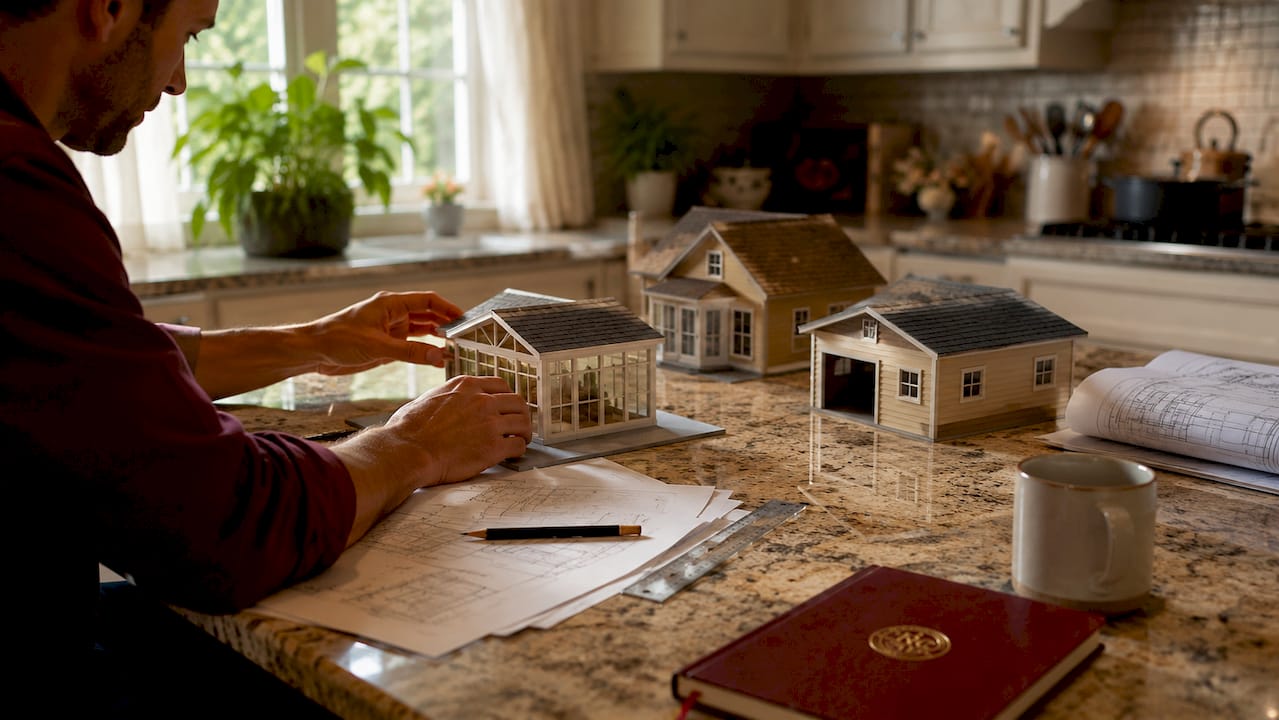
A bump-out is the smallest and least disruptive option. It extends one room outward by a few feet, often without requiring a full foundation. A full room addition, such as a new bedroom or home office, requires foundation work and full structural framing. Second-story additions are the most complex because they require reinforcing the existing structure to carry the new load. Sunrooms sit at the lighter end of the spectrum structurally, but still need permits in most jurisdictions. ADUs, sometimes called in-law suites or guest houses, are increasingly popular in North Texas because they can generate rental income.
| Addition type | Typical cost per sq ft | Relative complexity | Common use case |
|---|---|---|---|
| Bump-out | $80–$150 | Low | Kitchen or bathroom expansion |
| Full room addition | $150–$300 | Medium | Bedroom, office, family room |
| Second-story addition | $200–$350+ | High | Major square footage increase |
| Sunroom | $100–$250 | Low to medium | Flex space, light-filled retreat |
| Garage conversion | $50–$150 | Low to medium | ADU, studio, home gym |
| Accessory dwelling unit | $150–$350 | High | Rental income, multigenerational living |
Pro Tip: Before you fall in love with a floor plan, walk around the outside of your home and consider how the addition will look from the street. Additions that clash architecturally with the existing roofline, siding, or window style can reduce curb appeal even while adding square footage.
How much does a home addition cost in 2026?
The national average for a home addition ranges from $150 to $350 per square foot as of Q1 2026, with total project costs typically landing between $55,000 and $95,000 for a standard-quality build. That range reflects a wide spread in what homeowners actually pay depending on addition type, finish level, and regional labor costs. Ground-floor additions generally cost $80 to $200 per square foot, while second-story additions push higher due to structural reinforcement requirements. Premium finishes can exceed $600 per square foot. These numbers mean a 400-square-foot family room addition in North Texas could realistically cost anywhere from $60,000 to $140,000 depending on your choices.
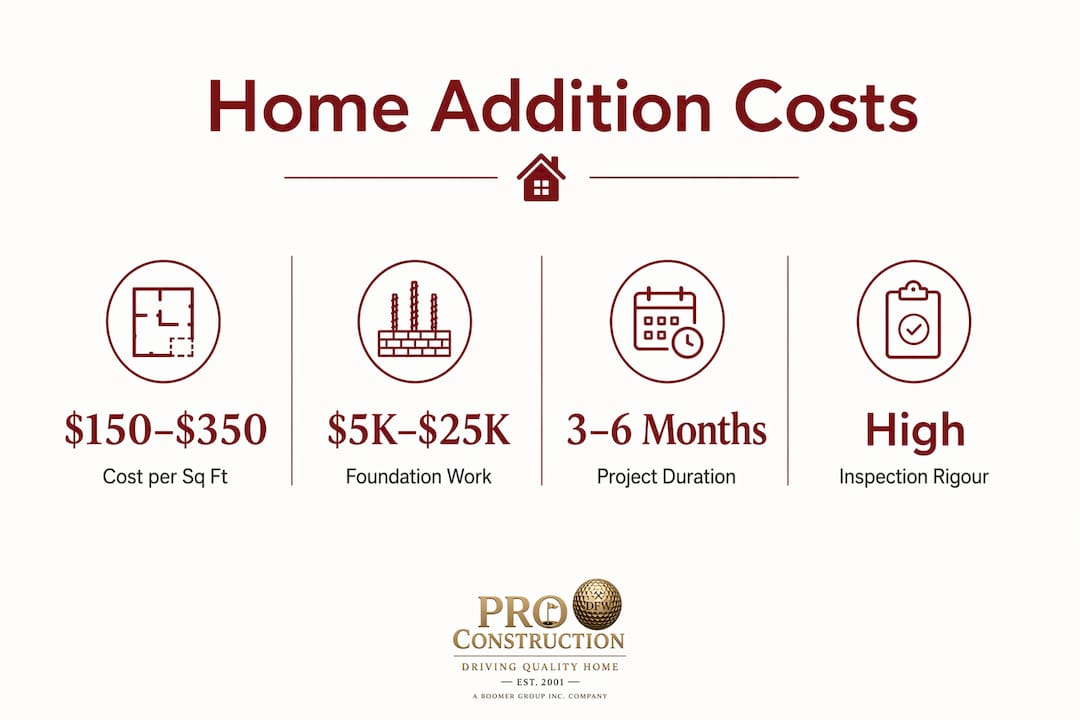
What most homeowners underestimate are the hidden costs beyond finishes. Extending electrical panel capacity, relocating HVAC ducts, re-engineering foundation footings, and paying for permits and inspections can add tens of thousands of dollars to a budget that looked reasonable on paper. These are not optional line items. They are structural and code requirements that cannot be skipped.
| Cost driver | Typical cost range | Notes |
|---|---|---|
| Foundation work | $5,000–$25,000 | Varies by soil type and addition size |
| Framing and structure | $15,000–$50,000 | Higher for second-story additions |
| HVAC integration | $3,000–$12,000 | Depends on existing system capacity |
| Electrical upgrades | $2,000–$8,000 | Panel upgrades add cost |
| Permits and inspections | $1,500–$5,000 | Varies by municipality |
| Finishes (flooring, drywall, paint) | $10,000–$40,000+ | Highly variable by material choice |
Pro Tip: Budget for permits, mechanical integration, and foundation work before you price out countertops or flooring. Homeowners who reverse this order routinely run out of money before the walls are closed in.
What are the essential steps to plan and get permits for a home addition?
Planning a home addition correctly starts well before any design work. The first step is confirming what your zoning district allows. Setbacks, which are the minimum required distances between your structure and property lines, often invalidate expansion plans that look feasible on a sketch. A professional survey early in planning is not optional. It is the document that tells you exactly where you can build.
Once zoning is confirmed, structural drawings prepared by a licensed engineer or architect become the foundation of your permit application. Most municipalities require these drawings to show how the new structure connects to the existing one, how loads are transferred, and how mechanical systems will be integrated. Skipping or rushing this step leads to permit rejections and costly redesigns. Detailed guidance on North Texas permit requirements can help you understand what your specific municipality expects before you submit.
Key planning checkpoints before breaking ground:
- Confirm zoning classification and allowable uses for your lot
- Order a professional property survey to verify setback compliance
- Hire a licensed architect or structural engineer for drawings
- Submit permit applications to your local building department
- Schedule required inspections at foundation, framing, and final stages
- Verify that your contractor carries the correct licenses and insurance for your jurisdiction
Careful upfront planning that addresses zoning and structural details before construction begins significantly reduces project delays and cost overruns. This is not a bureaucratic formality. It is the difference between a project that finishes on schedule and one that stalls for months.
What are the key benefits of home additions beyond more space?
A home addition is cost-effective compared to moving, particularly for homeowners who plan to stay in their home for five or more years or want to generate rental income through an ADU. The financial case is straightforward: moving costs, real estate commissions, and the premium you pay for a larger home in a competitive market often exceed what a well-planned addition costs. You stay in the neighborhood you know, keep your mortgage rate, and gain exactly the space you need.
Beyond finances, home additions directly increase property value by bringing your home closer to the size and feature standards of comparable properties in your neighborhood. An addition that adds a primary suite, a dedicated home office, or a legal ADU addresses buyer demand directly. The key qualifier is design integration. Architectural cohesion between the new addition and the existing home is critical for perceived value. Disjointed additions can actually reduce a home's appeal despite adding square footage.
"Integrating new spaces architecturally with transition portals and unified material palettes enhances both aesthetics and long-term home value. A well-designed addition should feel like it was always part of the home." — Tao + Lee architectural design team
Quality of life improvements are harder to quantify but equally real. A multigenerational family that adds an ADU for aging parents avoids assisted living costs. A growing family that adds two bedrooms avoids a disruptive school-district move. These are decisions that compound in value over years, not just at resale.
What mistakes should homeowners avoid when planning a home addition?
The most expensive mistakes in home addition projects share a common cause: homeowners make aesthetic decisions before resolving regulatory and structural realities. Construction and remodeling expert Jason Marks notes that focusing prematurely on finishes without first resolving zoning, setbacks, and structural needs leads to costly mid-project revisions. Tile selections and cabinet choices are irrelevant if your permit gets rejected.
Choosing a contractor based on price alone is another common error. The lowest bid frequently reflects missing scope, underqualified labor, or a contractor who will request change orders once the project is underway. Reviewing best practices for selecting a home addition contractor before signing any contract protects you from this pattern.
Top mistakes to avoid:
- Skipping the professional property survey before designing the addition
- Choosing finishes before confirming structural and permit feasibility
- Hiring a contractor without verifying licenses, insurance, and references
- Underbudgeting for mechanical system upgrades and foundation work
- Ignoring how the addition's exterior will integrate with the existing home's roofline and materials
- Starting construction before all permits are approved and posted on site
Waterproofing is one area where even experienced homeowners underinvest. Foundation connections between old and new construction are a common moisture entry point. Understanding common waterproofing mistakes at the foundation level can prevent structural damage that surfaces years after the project closes.
Key takeaways
A home addition delivers lasting value only when planning, permitting, and structural integration are handled correctly from the start.
| Point | Details |
|---|---|
| Definition matters | A home addition creates new square footage tied to foundation and structure, unlike a renovation. |
| Cost range is wide | National averages run $150–$350 per square foot, with hidden mechanical costs adding significantly more. |
| Permits are non-negotiable | Zoning verification, structural drawings, and inspections are required steps, not optional extras. |
| Design integration drives value | Architecturally cohesive additions increase property value; disjointed ones can reduce it. |
| Planning order is critical | Resolve zoning and structure before selecting finishes to avoid costly mid-project revisions. |
What 25 years of additions taught me about getting them right
After more than two decades of building home additions across North Texas, the pattern I see most often is homeowners who arrive with a clear vision of what they want but no clear picture of what the project actually requires. They know they want a new primary suite or a guest house. They have Pinterest boards and paint swatches. What they do not have is a survey, a zoning confirmation, or a realistic budget that includes the foundation and mechanical work underneath the pretty finishes.
The projects that go smoothly share one trait: the homeowner treated the regulatory and structural phase as seriously as the design phase. They got the survey done first. They hired an engineer before they hired a tile installer. They asked their contractor hard questions about permit timelines and inspection schedules before signing a contract.
The projects that go sideways almost always involve someone who wanted to skip ahead. They found a contractor willing to start without permits, or they designed a beautiful addition that turned out to violate setback rules by four feet. These are not rare edge cases. They happen regularly, and the cost to correct them is always higher than the cost to prevent them.
My honest advice: treat the planning phase as the most important phase. The construction part is straightforward once the regulatory and structural groundwork is solid. The structural and mechanical considerations that seem tedious on paper are exactly what protect your investment for the next 20 years.
— PRO
Ready to expand your home? PRO Construction can help
PRO Construction has spent over 25 years building home additions across Keller, Fort Worth, and the surrounding North Texas area. With a top 1% ranking on BuildZoom, the team handles every phase of your project, from zoning verification and permit applications through structural construction and final inspection.
Whether you are planning a new bedroom suite, a garage conversion, or a full ADU, PRO Construction brings the structural expertise and transparent project management that homeowners in this region rely on. Homeowners in Keller can explore professional addition services and ask about current discounts. Fort Worth homeowners can learn more about expanding your space in 2026 with a team that has done it hundreds of times before.
FAQ
What is the difference between a home addition and a remodel?
A home addition creates entirely new square footage attached to the existing structure, requiring foundation work and new permits. A remodel modifies existing space without expanding the home's footprint.
How long does a home addition take to complete?
Most home additions take three to six months from permit approval to final inspection, depending on size and complexity. Second-story additions and ADUs typically run longer due to structural requirements.
Do I always need a permit for a home addition?
Yes. Any home addition that involves new foundation, structural framing, or mechanical system integration requires a building permit in virtually every U.S. jurisdiction. Building without permits creates legal and resale complications.
Does a home addition increase property value?
A well-designed home addition increases property value by adding usable square footage and meeting neighborhood size standards. Architectural cohesion between the addition and the existing home is the key factor in how much value is added.
What is the cheapest type of home addition?
A bump-out is typically the least expensive home addition type, often costing $80 to $150 per square foot, because it requires minimal foundation work and extends only one room outward by a few feet.