

A licensed contractor is the single non-negotiable requirement for any accessory dwelling unit (ADU) project that needs to pass inspection, secure a permit, and hold its value over time. Whether you are building a detached backyard cottage in North Texas or converting a garage in California, the legal and practical case for hiring a licensed builder is airtight. Jurisdictions from California to Massachusetts have codified licensed contractor requirements directly into their ADU permitting frameworks. This article explains the legal mandates, quality implications, and financial risks that make ADU construction licensing a requirement, not a preference.
Why ADU construction requires a licensed contractor by law
The legal case starts before a single nail is driven. California law allows applicants to use licensed contractors for confidential third-party code inspections before filing ADU permits. This means a licensed professional assesses site conditions and project scope before the permit application is even submitted. That pre-permit role is not optional. It is built into the state's official ADU framework.
Massachusetts takes a similarly firm position. All ADU projects require a building permit, and licensed general contractors or design-build firms typically manage the entire permit application and inspection process. Homeowners who attempt to navigate that process alone face rejection, delays, and costly resubmissions. The permit system is designed around licensed contractor involvement, not around DIY applicants.
Beyond individual states, most jurisdictions set licensing thresholds tied to project value and scope. Projects above a certain dollar amount legally require a licensed general contractor to pull the permit. ADUs routinely exceed those thresholds. The licensing requirement is not bureaucratic friction. It is the mechanism that ties legal accountability to the person responsible for the build.
Key legal requirements tied to ADU contractor licensing include:
- Permit applications in many states must be filed by or co-signed by a licensed contractor
- Third-party pre-permit inspections must be conducted by licensed professionals
- Contractors must carry minimum bonding thresholds and insurance to qualify for permits
- Disciplinary history with a state licensing board can disqualify a contractor from pulling ADU permits
How do licensed contractors ensure ADU quality and code compliance?
ADUs are not simple room additions. They are self-contained living units that must meet a specific and demanding set of code requirements. ADUs must comply with current energy and building codes, including separate electric and water metering, stormwater restrictions, and dedicated addresses. A licensed contractor knows these requirements because they are tested on them and legally obligated to follow them.
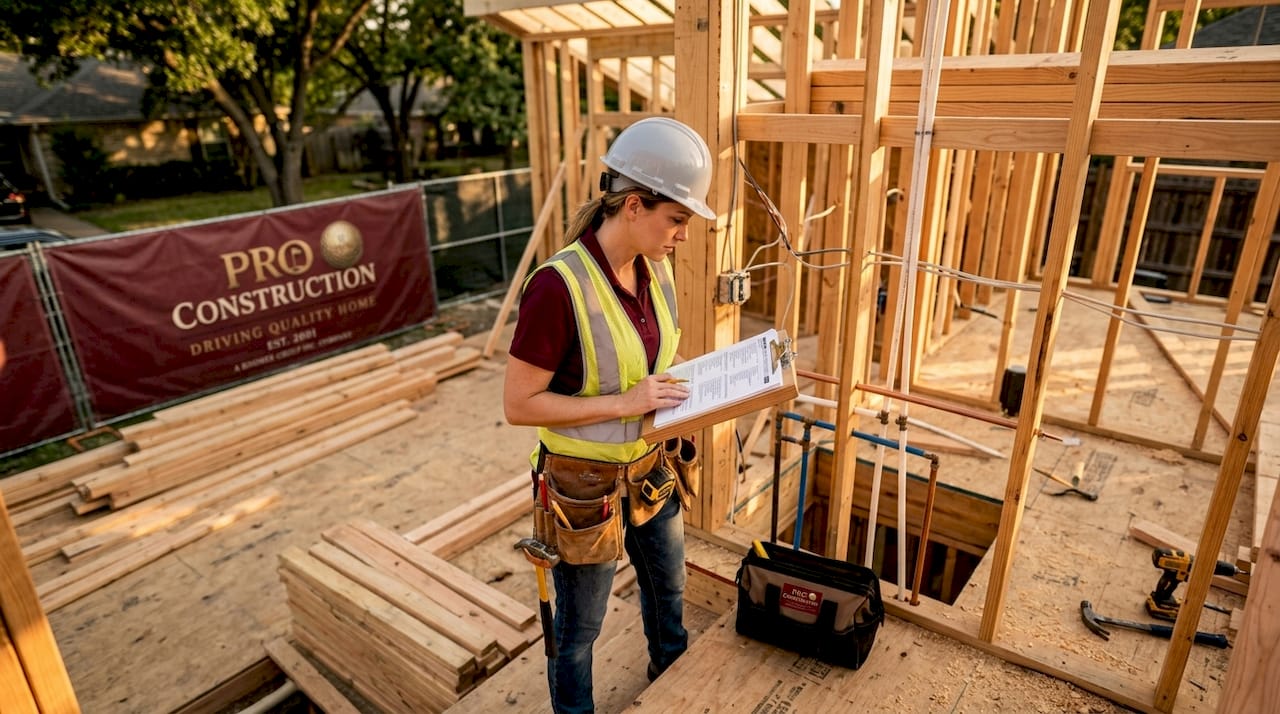
Code compliance is not a one-time checkbox. Building codes update regularly, and energy codes in particular have tightened significantly in recent years. A licensed contractor tracks those changes as part of maintaining their license. An unlicensed builder has no such obligation and no formal mechanism for staying current.
The documentation side of compliance is equally demanding. Licensed contractors guide permit packages through approvals, inspections, and final occupancy certificates. That end-to-end document management is what separates a project that closes cleanly from one that stalls at the final inspection stage.
"The practical workflow for permit success involves thorough documentation, sequencing, inspections, and certified final occupancy. Licensed contractors manage that workflow end-to-end." — ADU Resource Center, Massachusetts
Pro Tip: Ask your contractor to show you the specific energy code version their design is built to. A licensed builder will answer immediately. An unlicensed one will not know what you are asking.
Licensed contractors also shape the permit submission itself. Accurate third-party inspection reports from licensed professionals reduce back-and-forth with the building department, cutting revision cycles that can add weeks to a project timeline. That accuracy is a direct product of professional training and accountability.
What risks do homeowners face with unlicensed contractors?
The risks of hiring an unlicensed contractor for an ADU project are not theoretical. They are financial, legal, and structural. Here is what homeowners and investors actually face:
- Permit denial and forced demolition. Work performed without a licensed contractor may not qualify for a permit at all. In some cases, unpermitted structures must be torn down entirely, with the homeowner bearing the full cost.
- No access to homeowner protection funds. Unlicensed work is not covered by state homeowner protection funds. If the contractor disappears or the work fails, you have no legal safety net.
- Failed inspections and rework costs. Unlicensed work frequently fails building inspections because the builder is not current on code requirements. Each failed inspection triggers rework, re-inspection fees, and project delays.
- Personal liability for injuries. If an unlicensed contractor or their worker is injured on your property, your homeowner's insurance may not cover the claim. You could be personally liable for medical costs and legal fees.
- Reduced or eliminated property value. An ADU built without proper permits and licensed oversight cannot be legally rented or sold as a permitted unit. That eliminates the income potential and reduces resale value.
The financial exposure from a single unlicensed ADU project can easily exceed the cost difference between licensed and unlicensed bids. The apparent savings disappear fast once inspections fail and rework begins.
Licensed vs. unlicensed contractors: what matters most in ADU builds
The comparison between a licensed and unlicensed contractor is not close when you look at the full picture. Here is a direct breakdown of the factors that matter most in ADU construction:
| Factor | Licensed contractor | Unlicensed contractor |
|---|---|---|
| Permit eligibility | Can pull permits directly in most jurisdictions | Cannot pull permits; homeowner assumes liability |
| Code knowledge | Tested and updated on current building and energy codes | No formal obligation to stay current |
| Insurance and bonding | Required by licensing boards for permit eligibility | No minimum requirements; coverage varies widely |
| Accountability | Subject to state licensing board complaints and disciplinary action | No formal oversight or recourse mechanism |
| Inspection management | Manages sequencing, documentation, and occupancy certificates | No structured process; inspections frequently fail |
| Long-term value | Permitted ADU adds legal, rentable square footage | Unpermitted unit may require demolition or costly legalization |
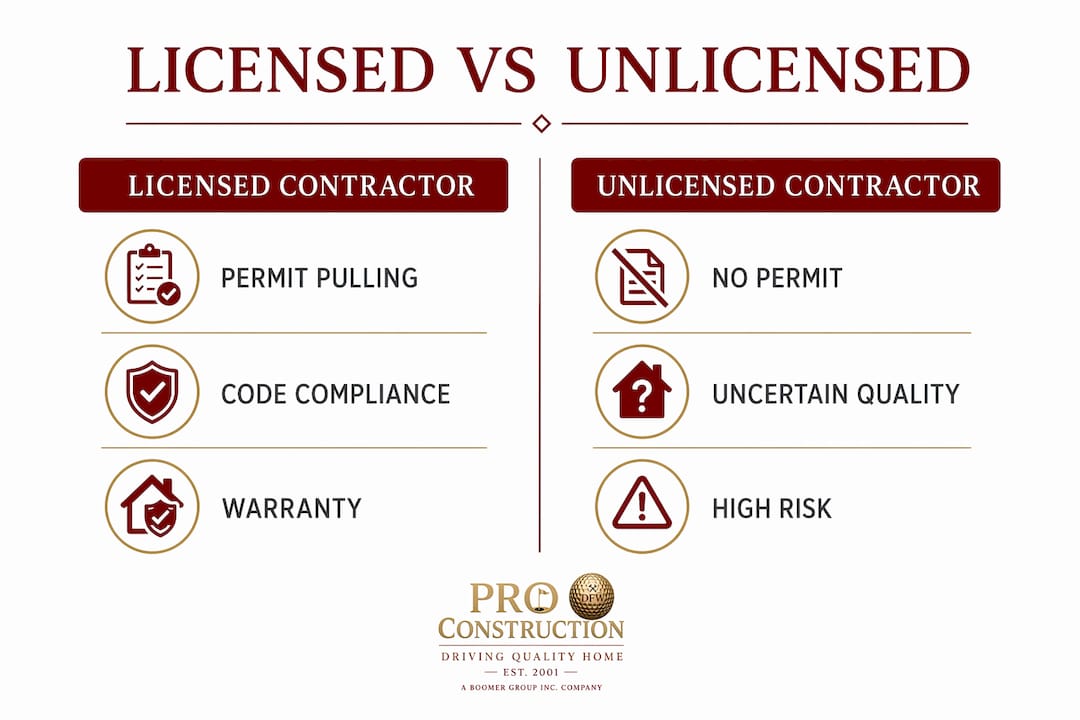
The cost difference between licensed and unlicensed bids is real, but it does not account for the risk premium you absorb when you hire someone without a license. Licensed contractors also tend to carry professional relationships with local building departments, which speeds up approvals and reduces friction during inspections.
When evaluating bids, look beyond the bottom line. A lower number from an unlicensed contractor is not a discount. It is a transfer of risk from them to you.
How to choose and verify a licensed contractor for your ADU
Verifying a contractor's license takes less than ten minutes and protects you from the most common ADU hiring mistakes. Here is how to do it correctly:
- Check the state licensing board directly. In California, use the Contractors State License Board (CSLB). In Arizona, use the Registrar of Contractors (ROC). Most states have a free online lookup tool. Confirm the license is active, not expired or suspended.
- Verify bonding and insurance separately. A license alone does not confirm coverage. Ask for a certificate of insurance naming you as an additional insured, and confirm the bond amount meets your state's minimum for the project size.
- Review complaint history. State licensing boards publish disciplinary records. A contractor with multiple complaints or a prior license suspension is a red flag regardless of their current license status.
- Ask specific ADU questions. Ask how many ADUs they have completed in your county, which building department they work with most frequently, and how they handle permit revisions. A qualified builder answers these questions without hesitation.
- Require a written contract. The contract should specify the full scope of work, payment schedule tied to milestones, permit responsibility, and a timeline with defined completion dates.
Pro Tip: Cross-reference your contractor's license number on BuildZoom, which aggregates permit history and complaint data across multiple states. A contractor ranked in the top 1% on BuildZoom has a verified track record of completed, permitted projects.
For North Texas homeowners, the ADU contractor selection process involves additional local considerations around municipal permit timelines and HOA requirements. Working with a builder who has direct experience in your specific county speeds up every stage of the process.
You can also review the ADU permitting guide for North Texas to understand exactly what documentation your licensed contractor will need to prepare before submitting your application.
Key takeaways
Licensed contractors are legally required for ADU construction because they manage permits, ensure code compliance, and carry the insurance and accountability that protect homeowners from financial and legal exposure.
| Point | Details |
|---|---|
| Legal mandate | Most jurisdictions require licensed contractors to pull ADU permits and conduct pre-permit inspections. |
| Code compliance | Licensed builders stay current on energy and building codes, reducing failed inspections and rework. |
| Unlicensed risk | Unpermitted ADU work is not covered by homeowner protection funds and can result in forced demolition. |
| Verification process | Check state licensing boards like CSLB or ROC, confirm bonding and insurance, and review complaint history. |
| Long-term value | A permitted ADU built by a licensed contractor adds legal, rentable square footage and protects resale value. |
What 25 years of ADU work taught me about licensing
Most homeowners think licensing is about credentials on paper. After 25 years building in North Texas, I can tell you it is about what happens when something goes wrong. And something always comes up on an ADU project, whether it is a soil condition that changes the foundation plan, a utility conflict that requires a design revision, or a building department comment that needs a fast, accurate response.
The contractors who handle those moments without derailing the project are the ones who have been through the permit process dozens of times. They know which inspector prefers which documentation format. They know how to write a revision response that gets approved on the first pass. That knowledge does not come from a license exam. It comes from years of permitted, inspected, completed work.
I have seen homeowners try to save money by hiring unlicensed crews for ADU framing or electrical. The savings rarely survive the first inspection. What they thought was a $15,000 discount turned into $30,000 in rework and a six-month delay. The math never works in favor of cutting the licensing requirement.
The other misconception I hear regularly is that licensing only matters for large commercial projects. ADUs are small in square footage but not in complexity. Separate metering, energy compliance, fire separation requirements, and occupancy certificates make an ADU more code-intensive per square foot than most standard room additions. That complexity is exactly why experienced ADU builders who manage compliance end-to-end are worth every dollar of their fee.
Prioritize licensing. Verify it before you sign anything. And treat a low bid from an unlicensed contractor as the liability it actually is.
— PRO
Build your ADU right with PRO Construction
PRO Construction has spent over 25 years completing licensed, permitted home additions and ADU builds across North Texas. With a top 1% ranking on BuildZoom, every project is backed by verified permit history, full insurance coverage, and a structured project management process that keeps clients informed at every stage. From pre-permit planning through final occupancy, PRO Construction handles the documentation, inspections, and code compliance that make ADU projects succeed. If you are ready to move forward, explore PRO Construction's licensed ADU contractor services or review the Fort Worth ADU builder guide to understand what a fully permitted build looks like from start to finish.
FAQ
Why does ADU construction require a licensed contractor?
Most jurisdictions require licensed contractors to pull building permits for ADU projects, conduct pre-permit inspections, and manage code compliance. Unlicensed work is typically ineligible for permits and not covered by homeowner protection funds.
What happens if I hire an unlicensed contractor for my ADU?
Unpermitted ADU construction can result in failed inspections, forced rework, permit denial, and in some cases mandatory demolition. You also lose access to legal recourse and insurance protection if the work fails.
How do I verify a contractor's license before hiring?
Use your state's licensing board lookup tool, such as the CSLB in California or the ROC in Arizona, to confirm the license is active and free of disciplinary actions. Also verify bonding and insurance directly with the contractor.
What codes must a licensed contractor follow for ADU construction?
ADUs must comply with current energy codes, building codes, and local requirements including separate electric and water metering, stormwater rules, and dedicated addresses. Licensed contractors are tested on these requirements and legally obligated to follow them.
Does hiring a licensed contractor cost more than hiring an unlicensed one?
Licensed contractors typically charge more upfront, but unlicensed work frequently leads to failed inspections, rework costs, and legal liability that far exceed the initial price difference. The long-term cost of unlicensed work is almost always higher.