

A home addition timeline is the end-to-end schedule from initial design through final inspection, typically spanning 6 to 14 months depending on project complexity, permitting requirements, and the size of the addition. Most homeowners underestimate this range by half, budgeting mentally for a summer project that bleeds into the following spring. Understanding what is a home addition timeline before you break ground is the single most effective way to protect your budget, your sanity, and your relationship with your contractor.
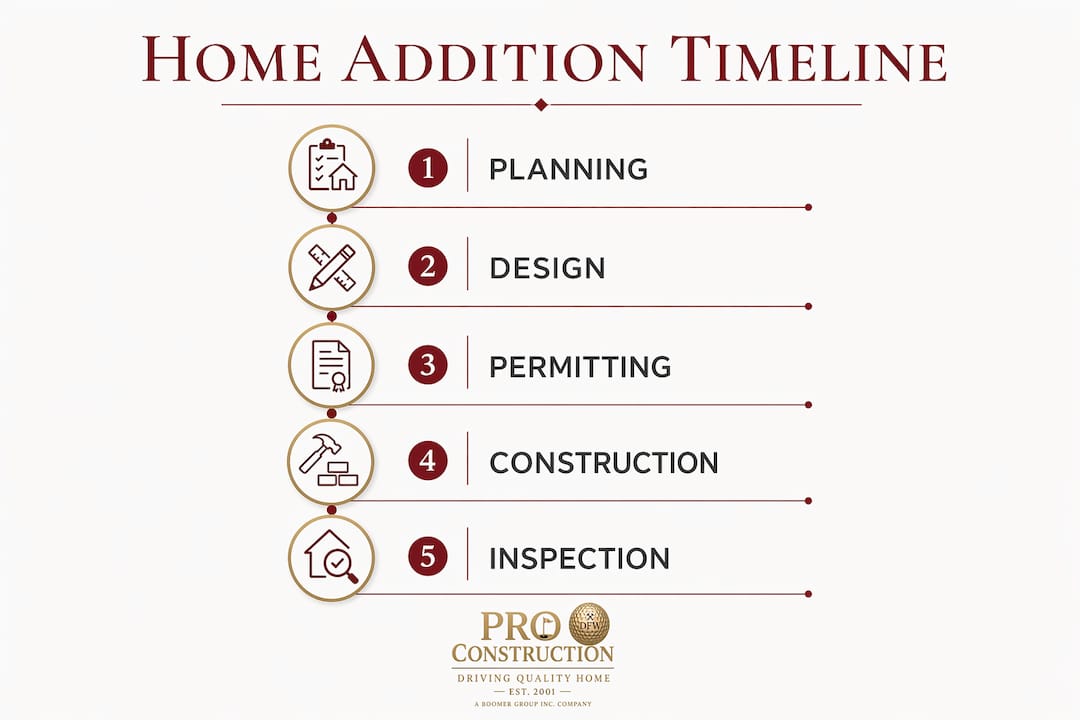
The full process covers five distinct phases: planning and feasibility, design and architectural drawings, permitting and approvals, active construction, and final inspections. Each phase has its own pace, its own risks, and its own decisions that only you as the homeowner can make. Miss a decision window in week three and you may not recover that lost time until month seven.
What are the main stages in a home addition timeline?
The home addition process follows a predictable sequence, even when individual projects vary widely. Knowing the stages in order gives you a mental map so you are never surprised by what comes next.
- Initial planning and feasibility (2 to 4 weeks). This is where you define scope, set a budget, and confirm your lot can physically accommodate the addition. Zoning setbacks, utility easements, and soil conditions all get evaluated here.
- Design and architectural drawings (4 to 8 weeks). A licensed architect or designer translates your vision into permit-ready construction documents. Structural engineering for load paths is completed during this phase.
- Permitting and approvals (4 to 12 weeks). Your contractor submits drawings to the local building department. Standard permit approvals typically take 2 to 4 weeks, though complex jurisdictions run longer.
- Site preparation and foundation (2 to 4 weeks). Excavation, forming, and pouring the foundation happen here. Weather is the primary risk factor at this stage.
- Framing, rough-ins, and exterior work (4 to 10 weeks). The skeleton of the addition goes up, followed by rough electrical, plumbing, and HVAC. Exterior sheathing, windows, and roofing close the structure.
- Insulation, drywall, and finishes (4 to 8 weeks). Interior work progresses from insulation through drywall, paint, flooring, cabinetry, and trim.
- Final inspections and closeout (1 to 3 weeks). Mandatory inspections covering footings, framing, insulation, and final trade sign-offs add 1 to 3 weeks to the schedule before your certificate of occupancy is issued.
The table below shows how these stages stack up across a typical project.
| Stage | Typical duration |
|---|---|
| Planning and feasibility | 2 to 4 weeks |
| Design and architectural drawings | 4 to 8 weeks |
| Permitting and approvals | 4 to 12 weeks |
| Site prep and foundation | 2 to 4 weeks |
| Framing, rough-ins, and exterior | 4 to 10 weeks |
| Insulation, drywall, and finishes | 4 to 8 weeks |
| Final inspections and closeout | 1 to 3 weeks |
Homeowners should start planning 6 to 12 months before they want construction to begin. That lead time is not padding. It is the minimum needed to complete design, navigate permits, and line up a qualified contractor before a single shovel touches the ground.
How do project size and complexity affect the average addition timeline?
Not all additions are created equal. A modest bump-out to expand a kitchen is a fundamentally different project from a second-story addition, and the timeline reflects that difference sharply.
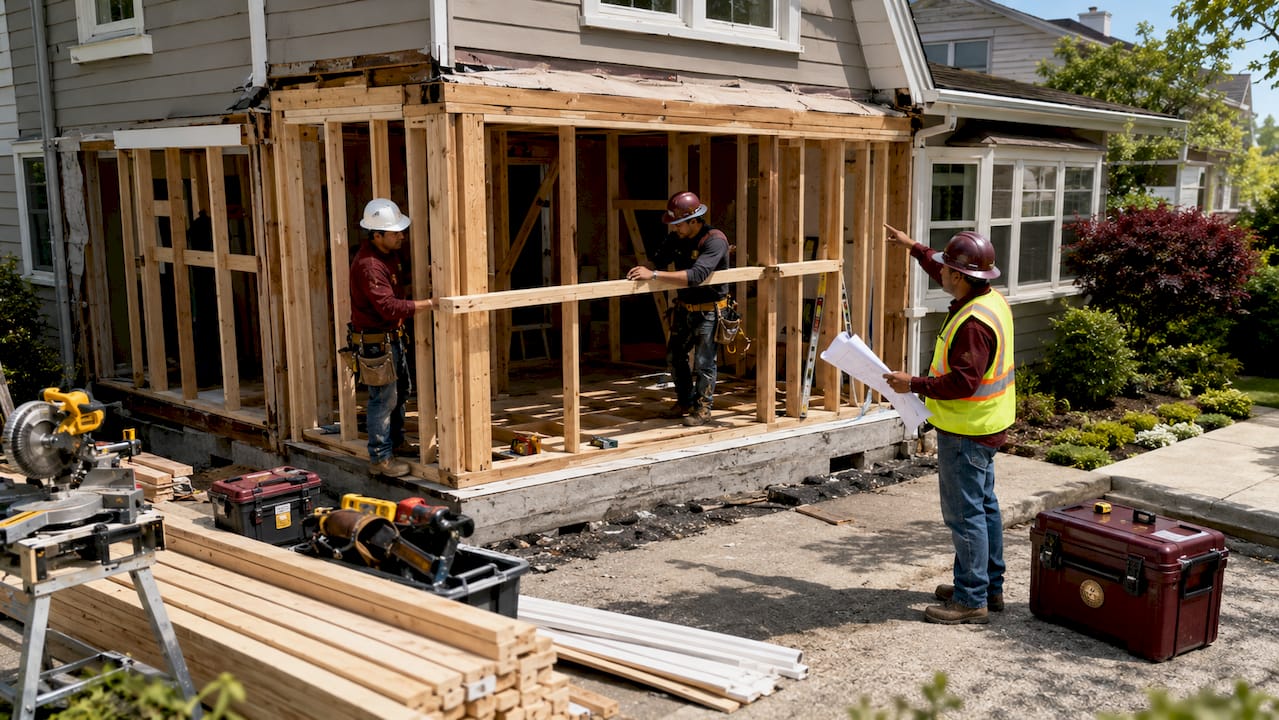
Addition types vary from a 2-month room bump-out to a 14-month accessory dwelling unit, depending on structural requirements, permit counts, and finish complexity. A second-story addition, for example, requires load path re-engineering to confirm the existing foundation and walls can carry the new weight. Overlooking this structural analysis leads to mid-construction surprises that can add weeks or months to the schedule.
The comparison below gives you a realistic picture of how long for a home addition based on project type.
| Addition type | Typical duration | Key complexity drivers |
|---|---|---|
| Room bump-out | 2 to 4 months | Minimal structural work, simple permits |
| Full first-floor addition | 4 to 7 months | Foundation, framing, full rough-ins |
| Second-story addition | 6 to 12 months | Load path engineering, full structural review |
| Accessory dwelling unit (ADU) | 6 to 14 months | Separate utilities, zoning approvals, inspections |
Permitting complexity also scales with project size. A bump-out in a standard residential zone may require a single building permit. An ADU in a municipality with strict zoning overlays may require a variance hearing, a design review board approval, and multiple departmental sign-offs. Each additional approval layer adds weeks to the home expansion schedule. Reviewing the types of residential additions before you commit to a scope helps you calibrate your timeline expectations from day one.
What are common causes of delays and how can homeowners avoid them?
Delays in the home renovation timeline rarely come from nowhere. They almost always trace back to one of four predictable sources.
Permitting complications. Permitting is the most underestimated cause of timeline shock in the entire home addition process. Standard permits take 2 to 4 weeks, but projects in historic districts or those requiring zoning variances can add 3 to 6 months beyond that baseline. The fix is to integrate your permit strategy at the design stage, not after drawings are complete. Discovering a setback violation after your architect has finalized plans forces a redesign that costs both money and weeks.
Homeowner decision delays. Slow decisions on finishes and materials are a top cause of schedule slippage on residential projects. When your contractor is ready to order tile and you have not selected it yet, the job stops. Cabinet lead times from manufacturers like Kraftmaid or Wellborn Cabinet can run 6 to 10 weeks. If you order late, your project waits.
Hidden conditions during demolition. Older homes frequently reveal structural, electrical, or plumbing issues once walls open up. Knob-and-tube wiring, undersized joists, or corroded drain lines all require remediation before new work can proceed. Building a 2-week contingency buffer into your schedule for this scenario is not pessimism. It is standard practice.
Contractor scheduling and weather. Concrete cannot be poured in freezing temperatures, and roofing cannot be installed during sustained rain. Contractor crew availability during peak season in North Texas, typically spring through early fall, also compresses scheduling windows.
- Finalize all finish selections before construction begins, not during.
- Ask your contractor for a written milestone schedule with decision deadlines tied to each phase.
- Research permit requirements for your specific municipality before design starts.
- Budget a 10 to 15 percent time contingency on top of your contractor's stated schedule.
- Confirm material lead times for long-order items like windows, doors, and cabinetry at the design stage.
Pro Tip: Idle days caused by sequencing gaps between trades inflate both costs and timelines. Ask your contractor how they manage trade sequencing and milestone tracking before you sign a contract. A contractor who cannot answer that question clearly is a contractor who will cost you weeks.
Can you live in your home during a home addition?
Whether you can stay in your home during construction depends almost entirely on the type of addition and how it connects to your living space. The answer is not a simple yes or no.
Phased additions that build outward from an exterior wall with minimal disruption to the existing structure often allow full occupancy throughout construction. A garage conversion, a rear family room addition, or a detached ADU typically fall into this category. Phased additions can allow occupancy with careful planning, while gut renovations that touch HVAC, electrical panels, or load-bearing walls frequently make living in the home unsafe or impractical.
The critical variable is utility disruption. When a contractor ties new electrical service into your main panel or reroutes plumbing through occupied areas, you will face periods without power or water. These windows are typically short, measured in hours rather than days, but they require coordination and advance notice. A second-story addition that requires shoring the first floor is a different situation entirely. Structural shoring work often makes portions of the home genuinely unsafe for occupancy.
Pro Tip: If you plan to stay in the home, negotiate a "disruption schedule" with your contractor before work begins. This is a written list of dates when utilities will be interrupted, which areas will be inaccessible, and for how long. Contractors who manage this proactively are far easier to live with than those who surprise you on a Tuesday morning with no water.
Living arrangements also affect the project schedule in a less obvious way. When homeowners are on-site, they tend to make faster decisions, catch issues earlier, and communicate more frequently with the crew. Projects where homeowners are present consistently run closer to schedule than those where the homeowner is remote and communication happens only by text.
Key takeaways
A home addition timeline runs 6 to 14 months from design to final inspection, and the homeowner's own decision speed is as critical to staying on schedule as the contractor's crew efficiency.
| Point | Details |
|---|---|
| Full timeline range | Most additions take 6 to 14 months from design through final inspection. |
| Start planning early | Begin the planning process 6 to 12 months before your target construction start date. |
| Project size drives duration | Bump-outs run 2 to 4 months; second-story additions and ADUs run 6 to 14 months. |
| Permits are the biggest wildcard | Standard permits take 2 to 4 weeks, but historic districts or variances can add 3 to 6 months. |
| Homeowner decisions matter | Late selections on finishes and materials are a leading cause of construction stoppages. |
What 25 years of home additions taught me about timelines
The homeowners who struggle most with their addition timelines are not the ones who picked a complicated project. They are the ones who treated the project as a decoration exercise rather than a structural engineering challenge. They focused on tile samples and paint colors before they confirmed their foundation could carry the load. That sequence gets the project into trouble before the first permit is submitted.
The permit piece surprises almost everyone. In my experience working on North Texas home additions, homeowners routinely assume permits are a two-week formality. They are not. Municipalities across the DFW area have different review cycles, different submittal requirements, and different appetites for variance requests. A project that sails through permitting in Keller may face a 90-day review in a neighboring city. The only way to avoid that shock is to research permit requirements before your architect finalizes drawings, not after.
The other thing I tell every homeowner: your decisions are on the critical path. Your contractor cannot order your windows until you select them. Your tile setter cannot start until your tile is on-site. Every week you delay a selection is a week that gets added to the back end of your schedule. The best contractors in the business will give you a decision log with deadlines. Honor those deadlines the same way you would honor a payment schedule.
Finally, build buffer time into your expectations from day one. A 10 to 15 percent time contingency is not a sign that your contractor is padding the schedule. It is honest project management. The homeowners who finish on time are almost always the ones who planned for the unexpected, communicated proactively, and made decisions quickly when asked.
— PRO
Plan your home addition with PRO Construction
PRO Construction has managed home additions across North Texas for over 25 years, with a top 1% ranking on BuildZoom earned through transparent communication and structured project oversight. From the first feasibility review through final inspection, the team handles design coordination, permitting, trade scheduling, and milestone tracking so your project does not stall waiting on decisions or approvals.
If you are planning a home addition in the Keller or Fort Worth area, PRO Construction offers personalized consultations and current discounts on new projects. Contact the team through the home addition contractors page to get a tailored timeline estimate for your specific project scope. For Fort Worth homeowners, the Fort Worth addition guide covers local permitting details and 2026 project considerations specific to your area.
FAQ
How long does a home addition take from start to finish?
The complete home addition process takes 6 to 14 months from design through final walkthrough, with the active construction phase running 3 to 8 months depending on project size and complexity.
What is the longest part of the home addition process?
Permitting is frequently the longest single phase, particularly in jurisdictions with historic overlays or variance requirements. Standard permits take 2 to 4 weeks, but complex approvals can add 3 to 6 months to the overall schedule.
How far in advance should I start planning a home addition?
Start the planning process 6 to 12 months before your target construction start date. That window covers design, permit submission, contractor selection, and material lead times without compressing any phase.
Does a second-story addition take longer than a first-floor addition?
Yes. A second-story addition typically takes 6 to 12 months compared to 4 to 7 months for a full first-floor addition, primarily because of the structural engineering required to confirm the existing foundation and walls can carry the additional load.
Can I speed up my home addition timeline?
The most effective way to compress the schedule is to make all finish and material selections before construction begins, confirm permit requirements at the design stage, and maintain fast communication with your contractor when decisions are needed. Contractor-side efficiency matters, but homeowner decision speed is equally critical to staying on schedule.