
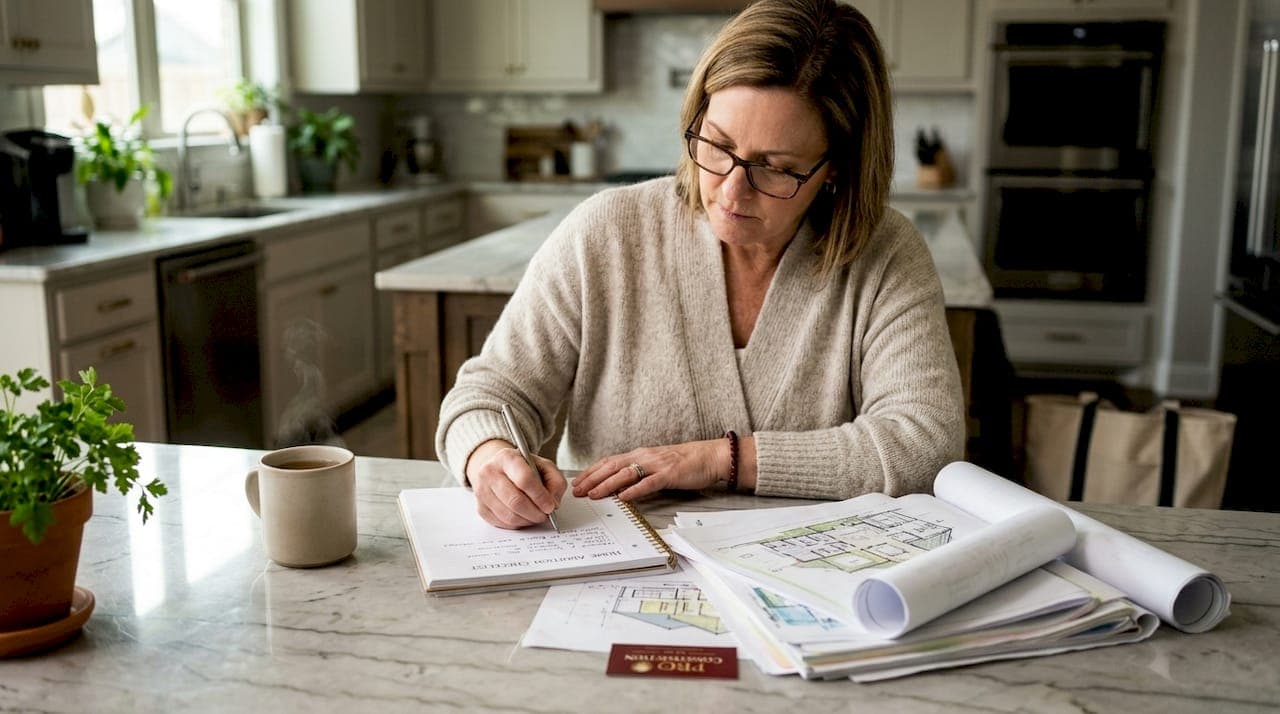
A home addition planning checklist is a structured set of steps that guides homeowners from initial concept through final construction, covering budget control, code compliance, and timeline management. Without one, projects routinely run over budget, stall at permit offices, or produce spaces that don't match the original goal. Tools like BuildZoom for contractor vetting, local permit offices for zoning checks, and budgeting apps like Houzz or HomeAdvisor cost estimators all support the process. This article breaks the full home addition process into ten clear, sequenced steps so you can move forward with confidence.
1. define your goals before anything else
A clearly defined goal for your addition prevents feature creep and keeps costs aligned with real functional needs. Before you call a single contractor, write down exactly what problem the addition solves. Are you adding a bedroom for a growing family, a home office, or a guest suite? The answer shapes every decision that follows.
Start by separating must-haves from nice-to-haves. A must-have is a private bathroom for the new bedroom. A nice-to-have is a built-in bookshelf wall. Keeping these lists separate protects your budget when trade-offs become necessary later.

Explore the different addition types available, from bump-outs and second-story additions to in-law suites, before locking in your concept. Each type carries different structural, permitting, and cost implications.
2. set a realistic budget with a contingency fund
Budget failure is the most common reason home additions stall or produce regret. Set your total project budget before design begins, not after. Include every cost category: design fees, permits, materials, labor, landscaping restoration, and temporary housing if needed.
Industry guidance recommends a 10–20% contingency fund on top of your base budget. That range exists because older homes carry more hidden surprises than newer ones. A 1970s ranch house warrants a 20% buffer; a 2005 build might need only 10%.
- Design and architecture fees: typically 5–15% of total construction cost
- Permit fees: vary by municipality, often $500–$3,000 for residential additions
- Construction labor and materials: the largest cost category, typically 60–70% of total budget
- Landscaping and exterior restoration: often overlooked, budget 3–5%
- Contingency fund: 10–20% of total, held in reserve
Contingency funds should cover only unexpected discoveries, such as dry rot, old wiring, or undersized footings found after demolition begins. Any unused contingency at project end can go toward upgrades or furnishings.
Pro Tip: Open a separate savings account labeled "addition contingency" and treat it as untouchable until a genuine surprise forces you to use it. This prevents budget creep from eating your safety net.
3. evaluate your existing structure first
Your current home's foundation and framing must be capable of carrying the new addition's load. Skipping this step is one of the most expensive mistakes homeowners make. A professional structural evaluation of your existing foundation and roofline can prevent costly redesigns and code failures later in the project.
Hire a licensed structural engineer before finalizing your design. The engineer will assess load paths, soil conditions, and connection points between the new addition and the existing structure. Their report becomes part of your permit application package.
4. check zoning laws and setback requirements
Local zoning codes dictate how large your addition can be, how close it can sit to property lines, and whether your lot can support additional square footage. Violating setback requirements means tearing out completed work. Check with your local planning department before any design work begins.
Key items to verify with your municipality:
- Setback distances from front, rear, and side property lines
- Maximum lot coverage percentage allowed for structures
- Height restrictions for additions and second stories
- HOA covenants that may impose additional design restrictions
- Flood zone or easement restrictions that limit buildable area
North Texas homeowners should review North Texas permitting requirements specific to their city, since Keller, Fort Worth, and surrounding municipalities each maintain their own codes.
5. hire an architect and prepare complete construction documents
Permit applications fail most often because of incomplete documentation. Complete construction documents include a site plan, floor plans, elevation drawings, and trade plans covering electrical, plumbing, and HVAC. Submitting a partial set guarantees rejection and delays.
A licensed architect produces stamped drawings that meet local code requirements. For structural elements, a licensed engineer must stamp the structural plans separately. Both stamps are typically required before a permit office will accept your application.
Pro Tip: Ask your architect to submit a pre-application review to your permit office before the official submission. Many municipalities offer this service free of charge, and it catches document gaps before they cost you weeks of delay.
Here is a summary of what complete construction documents must include:
| Document Type | Purpose |
|---|---|
| Site plan | Shows addition footprint, setbacks, and lot coverage |
| Floor plans | Details room layout, dimensions, and door/window locations |
| Elevation drawings | Shows exterior appearance from all four sides |
| Structural plans | Engineer-stamped framing, foundation, and load details |
| Trade plans | Electrical, plumbing, and HVAC layouts |
6. submit permits and manage the review timeline
Permit review timelines range from a few days to several months depending on project complexity and local workload. Complex additions can take months for review. California ADU permits carry a state-mandated 60-day processing deadline, but most states have no such cap.
The main building permit acts as an umbrella. Specialty trade permits for electrical, plumbing, and HVAC must be coordinated underneath it to prevent scheduling conflicts between subcontractors. Your general contractor typically manages this coordination, but you should verify it explicitly in your contract.
Submit your application with every required document in the correct format. Follow up with the permit office every 10 business days if you have not received a response. Delays compound quickly when permit reviews stall.
7. vet and hire your contractor team
The contractor you hire determines whether your project runs on schedule and within budget. Verify every candidate's state license, general liability insurance, and workers' compensation coverage before accepting a bid. Ask for three references from projects completed in the last two years and actually call them.
Use resources like contractor best practices guides and BuildZoom to cross-check license status and complaint history. Request at least three competitive bids and compare them line by line, not just by total price.
Your contract must include:
- A detailed scope of work with material specifications
- A payment schedule tied to construction milestones, not calendar dates
- A change order process requiring written approval before any extra work begins
- A project timeline with defined start and completion dates
- Warranty terms for both labor and materials
For guidance on selecting the right professional, review how to choose a contractor before signing anything.
8. understand the four construction phases
Every home addition moves through four overlapping phases: feasibility and design, pre-construction and permitting, active construction, and finishes and closeout. Treating these as sequential rather than overlapping is a planning error that adds weeks to your timeline.
Active construction itself follows a strict sequence. Foundation work comes first, then framing, then rough-in trades (electrical, plumbing, HVAC), then insulation, then drywall, then finishes. Each phase must be inspected and approved before the next begins.
| Phase | Key Activities | Common Pitfall |
|---|---|---|
| Feasibility and design | Goal setting, structural eval, architect hire | Skipping structural evaluation |
| Pre-construction and permitting | Document prep, permit submission, contractor hire | Incomplete permit documents |
| Active construction | Foundation through drywall | Starting next phase before inspection approval |
| Finishes and closeout | Trim, paint, punch list, final inspection | Skipping punch list review |
9. pass required inspections at every stage
Most structural home additions require 8–10 distinct inspections, covering foundation, framing, rough electrical, rough plumbing, mechanical, insulation, drywall, and final occupancy. Each inspection is a legal checkpoint. Failing to schedule one can void your permit and require demolition of completed work.
Local building inspectors control the pace of your project. Approved stamped plans must be on-site at every inspection. An inspector who arrives and finds no approved plans on site can issue a stop-work order immediately. That order halts all construction until the issue is resolved, often adding days or weeks to your schedule.
Pro Tip: Keep a physical binder on-site with your approved permit, stamped plans, and inspection log. Label it clearly and store it in a weatherproof location. Every inspector expects to see it, and having it ready signals professionalism.
10. complete the final walkthrough and closeout checklist
The project is not finished when the last coat of paint dries. A thorough punch list review catches incomplete or faulty work before you release the final payment. Walk every room with your contractor and document every item that needs correction in writing.
Final closeout steps include:
- Test all utilities: outlets, switches, HVAC, plumbing fixtures, and appliances
- Check all doors and windows for proper operation, sealing, and hardware
- Obtain the certificate of occupancy from your local building department
- Collect all lien waivers from the general contractor and every subcontractor
- Gather warranty documents for all installed systems and materials
- Organize all project records including permits, plans, inspection reports, and contracts
Pro Tip: Store digital copies of every project document in a labeled cloud folder. When you sell the home, buyers and their inspectors will ask for permit records. Having them organized saves time and protects your sale price.
Key takeaways
A successful home addition requires phased planning, complete permit documentation, and a funded contingency reserve before a single shovel breaks ground.
| Point | Details |
|---|---|
| Define goals first | Write a clear purpose statement for the addition to prevent scope creep and cost overruns. |
| Fund your contingency | Reserve 10–20% of your total budget for hidden issues discovered during construction. |
| Submit complete permit documents | Incomplete applications are the leading cause of permit delays; include all trade plans upfront. |
| Keep stamped plans on-site | Inspectors can issue stop-work orders if approved plans are not physically present at every inspection. |
| Close out formally | Collect lien waivers, certificates of occupancy, and warranty documents before releasing final payment. |
What 25 years of additions taught me about this process
The homeowners who struggle most with additions are not the ones with the smallest budgets. They are the ones who skip the goal-definition step and start designing before they know what problem they are solving. I have seen $200,000 additions that delivered exactly what the family needed, and $80,000 additions that created new problems because the scope was never clearly defined.
Permitting is the step that surprises people most. Homeowners expect it to be a formality. It is not. A single missing trade plan can push your review back by six weeks. I tell every client: treat the permit application like a job interview. Submit everything perfectly the first time, because a second chance costs you time you cannot get back.
The contingency fund conversation is the one I have most often. Homeowners want to spend it on upgrades. My advice is always the same: leave it alone until the walls are open. Old homes hide problems that no inspector can see from the outside. The contingency fund is not extra money. It is insurance you pay yourself.
Finally, communication with your contractor is not a soft skill. It is a project management tool. Weekly written check-ins, documented change orders, and milestone-based payments keep both sides accountable. The projects that finish on time and on budget are the ones where the homeowner stayed engaged, asked questions, and kept records.
— PRO
PRO construction handles every step for north TX homeowners
Planning a home addition in Keller or Fort Worth involves more moving parts than most homeowners expect. PRO Construction has managed this process for North Texas families for over 25 years, handling everything from design coordination and permit submission to construction management and final inspections.
PRO Construction holds a top 1% ranking on BuildZoom, which reflects a track record built on transparent budgeting, quality materials, and structured project oversight. Whether you need a bedroom addition, a home office, or a full second-story build, the team covers every phase so nothing falls through the cracks. Reach out to PRO Construction's Fort Worth team to discuss your project and get a clear, itemized estimate with no surprises.
FAQ
What is a home addition planning checklist?
A home addition planning checklist is an organized set of steps covering goal definition, budgeting, design, permitting, contractor selection, construction, inspections, and closeout. It keeps projects on schedule and within budget by preventing skipped steps.
How much should i budget for a home addition contingency?
Set aside 10–20% of your total project budget as a contingency fund. Older homes warrant the higher end of that range because hidden issues like dry rot or outdated wiring are more common.
How many inspections does a home addition require?
Most structural home additions require 8–10 inspections, including foundation, framing, rough electrical, rough plumbing, mechanical, insulation, and final occupancy. Each must be passed before the next construction phase begins.
What causes permit application delays?
Incomplete documentation is the leading cause of permit rejections. Submitting full architectural, structural, and trade plans in the correct format on the first attempt prevents the most common delays.
Do i need a structural engineer for a home addition?
Yes. A licensed structural engineer must evaluate your existing foundation and framing to confirm they can carry the new addition's load. Their stamped report is typically required as part of the permit application package.