

A construction contract is a legally binding agreement that defines the scope of work, payment terms, responsibilities, and timelines between a homeowner and a contractor for any building or renovation project. Without one, you have no enforceable record of what was promised, what it costs, or who is responsible when something goes wrong. The American Institute of Architects (AIA) publishes standardized contract templates used across the U.S. precisely because the stakes are too high to rely on handshakes. Whether you are adding a room, building a garage, or remodeling a kitchen, understanding this document is the first step to protecting your investment.
What is a construction contract and why does it matter?
A construction contract is defined as a legally binding agreement detailing scope, responsibilities, payment terms, and timelines for a building or renovation project. As of 2026, standard components include project scope, milestones, payment schedules, change order processes, and dispute resolution mechanisms. That list matters because each element closes a specific gap where disputes typically start.
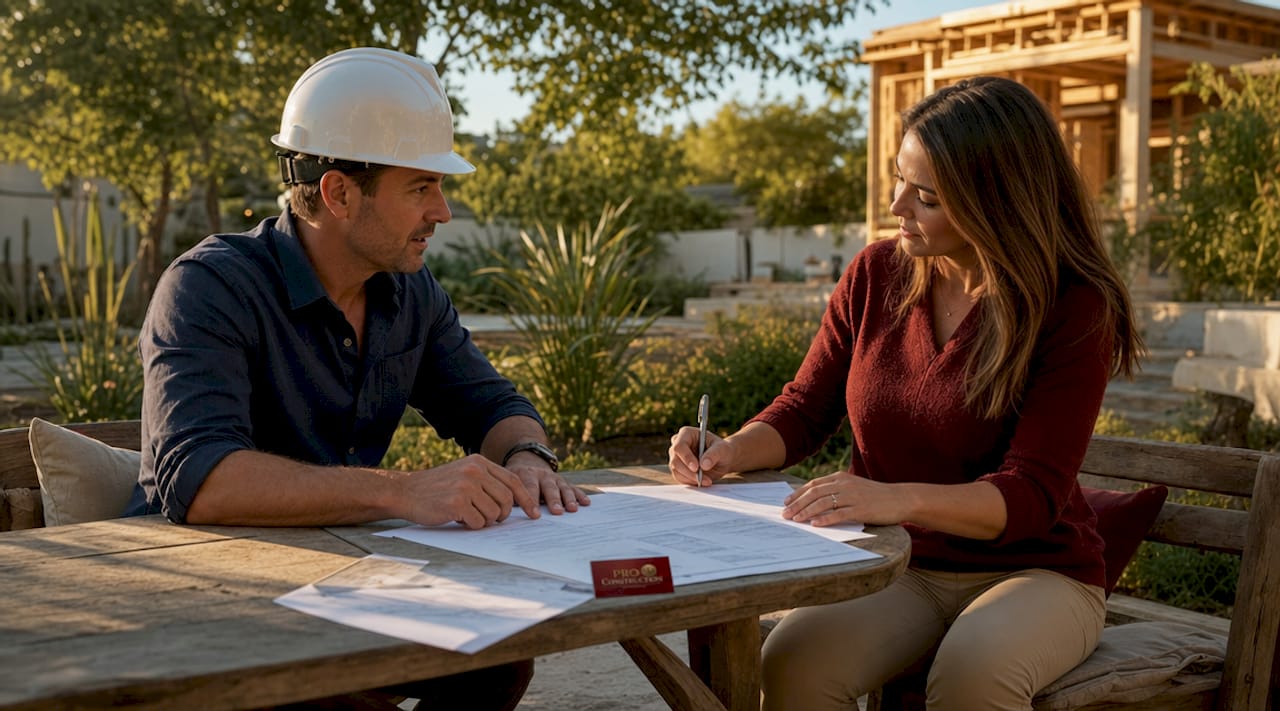
Think of it this way: a contractor may quote you $40,000 for a home addition, but without a written contract specifying exactly what that covers, "home addition" could mean very different things to each of you. The contract converts a verbal understanding into an enforceable obligation. Courts in Texas and across the U.S. treat signed construction agreements as the authoritative record of what both parties agreed to, which means the document you sign before work starts is the document that protects you if work goes sideways.
A well-written contract explicitly answers "who does what" and "how much it costs" before a single nail is driven. This transparency prevents budget surprises and the frustration that derails otherwise straightforward projects.
What are the main types of construction contracts?
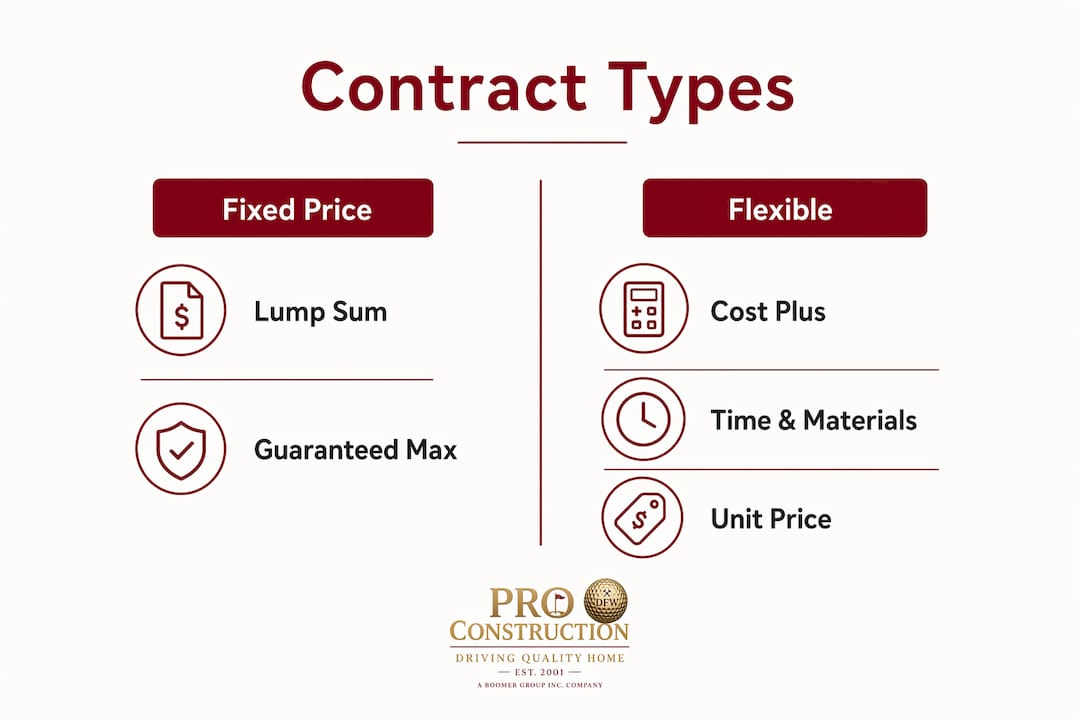
The five most common contract types are Lump Sum, Cost-Plus, Guaranteed Maximum Price (GMP), Time and Materials, and Unit Price. Each one allocates financial risk differently between you and your contractor, so choosing the right type is not a formality. It directly affects your budget exposure.
| Contract type | How pricing works | Financial risk to homeowner |
|---|---|---|
| Lump Sum (Fixed Price) | One agreed total price for defined scope | Low, if scope is fully defined upfront |
| Cost-Plus | Contractor costs plus a fixed fee or percentage | Higher, since final cost depends on actual expenses |
| Guaranteed Maximum Price | Cost-plus with a spending ceiling | Moderate, capped at the agreed maximum |
| Time and Materials | Hourly labor plus material costs | Highest, no ceiling unless you negotiate one |
| Unit Price | Fixed rate per measurable unit of work | Moderate, varies with quantity of units |
Lump sum contracts place most of the financial risk on the contractor, which is why they require nearly complete design documents before signing. Cost-plus contracts can proceed with minimal design definition, which makes them attractive for complex or evolving projects, but they require you to trust the contractor's cost reporting. GMP contracts offer a middle ground: the contractor absorbs costs above the ceiling, giving you a defined worst-case number.
Time and Materials contracts place the most risk on you as the homeowner. They work well for small repairs where scope is genuinely unknown, but they are a poor fit for large additions or garage builds where cost certainty matters.
Pro Tip: If your project design is not fully finalized, a GMP contract gives you flexibility without surrendering cost control. Ask your contractor to specify what triggers a change to the maximum price.
What are the essential elements of a construction contract?
Every construction contract you sign should contain the following elements. Missing even one creates a gap that can cost you money or months of delay.
- Project scope description. A detailed written description of all work to be performed, including materials, finishes, and quality standards. Vague language like "standard materials" is a red flag.
- Payment terms and milestone schedule. Specifies when payments are due, tied to project milestones rather than calendar dates. This protects you from paying for work not yet completed.
- Change order procedures. A formal process requiring written approval before any work outside the original scope begins. Over 50% of disputes arise from unclear or undocumented changes, making this clause non-negotiable.
- Project timeline and completion date. Start date, key milestones, and a final completion date. Include a clause specifying consequences for delays caused by the contractor.
- Dispute resolution mechanism. Specifies whether disputes go to mediation, arbitration, or litigation, and in which jurisdiction. Without this, resolving a disagreement defaults to the slowest and most expensive path.
- Integrated documents. A professional construction contract is an integrated agreement that includes all related documents such as design drawings, product specifications, and permits. Ignoring attachments is a common cause of dispute.
- Contractor license and insurance details. Confirms the contractor holds a valid license and carries general liability and workers' compensation insurance. You can cross-check Texas licenses using a contractor license guide before signing.
The contract should also be treated as a living document. Any scope change, material substitution, or timeline adjustment must be captured in a written amendment. A contract that reflects the project as it was on day one but not as it evolved on day thirty is only partially useful.
Pro Tip: Before signing, read every attachment listed in the contract. If a drawing or specification is referenced but not attached, do not sign until it is included. Omissions in integrated documents cause costly disputes.
Why construction contracts protect homeowners
Contracts reduce risk in three concrete ways: they define accountability, control costs, and create a legal record. Without specific clauses on change orders and dispute resolution, homeowners are left vulnerable to budget overruns and project stalls. That vulnerability is not theoretical. It shows up as a contractor who adds $8,000 in "extras" you never approved, or a project that stalls because no one agreed on who supplies the permits.
A common misconception among homeowners is that default legal protections automatically apply to residential construction projects. Many homeowners wrongly assume default laws protect them. Protections like fast-track adjudication must often be explicitly negotiated into the contract. If your contract does not specify a resolution process, you may be left with only litigation as a remedy, which is slow and expensive.
The contract also creates financial accountability. When payment is tied to verified milestones rather than arbitrary dates, you retain leverage throughout the project. A contractor who knows payment follows completion has a direct incentive to stay on schedule.
"A construction contract should be viewed as a transparency tool that clarifies roles and costs to prevent surprises, not only as a liability shield." — SpotDraft, The Ultimate Guide to Construction Contracts
Understanding reputable contractor qualities before you sign also matters. A contractor who resists putting terms in writing is signaling something worth paying attention to.
How to manage a construction contract during your project
Signing the contract is the beginning, not the end. Active contract management is what keeps projects on budget and on schedule.
- Review before signing. Read every clause, not just the payment section. Pay specific attention to the change order process, dispute resolution terms, and what constitutes project completion.
- Document every change in writing. Verbal approvals for scope changes are unenforceable. Every change order must be signed by both parties before work begins. This single habit prevents the majority of construction disputes.
- Tie communications to contract terms. When you email your contractor about a delay or a material substitution, reference the relevant contract clause. This creates a paper trail that mirrors the contract's structure.
- Use a contract log. A simple spreadsheet tracking change orders, payment milestones, and approval dates is enough for most residential projects. Contract management tools reduce delays and cost overruns by centralizing obligations, deadlines, and document versions in one place.
- Know when to get legal advice. If a contractor requests payment ahead of schedule, refuses to document a change order, or disputes a completion milestone, consult a construction attorney before responding. Early legal advice costs far less than litigation.
Pro Tip: Create a dedicated folder, physical or digital, for every contract document, change order, permit, and communication related to your project. If a dispute arises, your ability to produce organized records is your strongest asset.
For homeowners in North Texas, the residential contracts guide from PRO Construction covers state-specific legal standards that apply to your project.
Key takeaways
A construction contract is the single most important document in any building project, and its value depends entirely on how specifically it is written and how actively it is managed.
| Point | Details |
|---|---|
| Core contract definition | A legally binding agreement covering scope, payment, timelines, and responsibilities. |
| Choose the right contract type | Lump sum suits defined scopes; cost-plus and T&M suit evolving projects with higher homeowner risk. |
| Seven elements to verify | Scope, payment terms, change orders, timeline, dispute resolution, integrated documents, and license details. |
| Contracts require active management | Document every change in writing and tie all communications to specific contract clauses. |
| Default protections are not automatic | Legal safeguards like fast-track adjudication must be explicitly negotiated into your contract. |
What 25 years of contracts taught me
After working on hundreds of home additions and garage builds across North Texas, the pattern I see most often is not fraud or bad faith. It is vagueness. Homeowners sign contracts that use phrases like "as needed," "standard grade," or "per plan" without any plan attached. Those phrases feel harmless at signing and become expensive arguments six weeks into a project.
The second most common mistake is treating the contract as a one-time event. Homeowners read it once, sign it, and file it away. Then a material gets substituted, a wall gets moved two feet, or a subcontractor changes, and none of it gets documented. By the time the project ends, the actual work bears little resemblance to the signed contract. That gap is where disputes live.
My honest advice: demand specificity before you sign anything. If your contractor cannot tell you exactly what brand of insulation goes in the walls or exactly what triggers a change order, the contract is not ready. A contractor who pushes back on specificity is not saving you time. They are protecting their flexibility at your expense.
The best contracts I have seen are not the longest ones. They are the clearest ones. Every term defined, every attachment included, every process spelled out. Those projects finish on time, on budget, and with satisfied homeowners on both sides of the agreement.
— PRO
Work with contractors who put it in writing
PRO Construction has delivered home additions and garage builds across Keller and North Texas for over 25 years, with a top 1% ranking on BuildZoom. Every project starts with a clear, detailed contract that specifies scope, materials, milestones, and change order procedures before work begins. If you are planning a home addition or new garage build and want a contractor who treats the contract as a commitment rather than a formality, explore PRO Construction's home addition services and ask about current discounts. Transparent contracts and quality craftsmanship are the standard, not the exception.
FAQ
What is the construction contract definition in simple terms?
A construction contract is a written, legally binding agreement between a homeowner and a contractor that specifies what work will be done, how much it costs, when it will be completed, and who is responsible for what. It is the document that makes verbal promises enforceable.
What are the most common types of construction contracts?
The five most common types are Lump Sum, Cost-Plus, Guaranteed Maximum Price, Time and Materials, and Unit Price. Lump sum offers the most budget certainty for homeowners; Time and Materials carries the highest financial risk.
What should every construction contract include?
Every contract should include a detailed scope of work, payment milestones, a formal change order process, a project timeline, dispute resolution terms, and all integrated documents such as drawings and permits. Missing any of these creates enforceable gaps.
Do homeowners have automatic legal protections without a contract?
No. Many homeowners assume default laws cover them, but protections like fast-track adjudication must often be explicitly negotiated into the contract. Without specific clauses, your legal options in a dispute may be limited to costly litigation.
How do I manage a construction contract once work starts?
Document every change order in writing before work begins, keep a log of all approvals and payments tied to milestones, and maintain a complete file of all contract documents and communications. Active management prevents the majority of residential construction disputes.
Recommended
- Residential Construction Contracts: A Homeowner’s Guide for Keller & North Texas - PRO Construction
- Design Build Project Management: The Homeowner’s Guide to Stress-Free Construction - PRO Construction
- Qualities of Reputable Local Contractors: A Homeowner's Guide
- Contractor Financing Options for Homeowners: 2026 Guide