
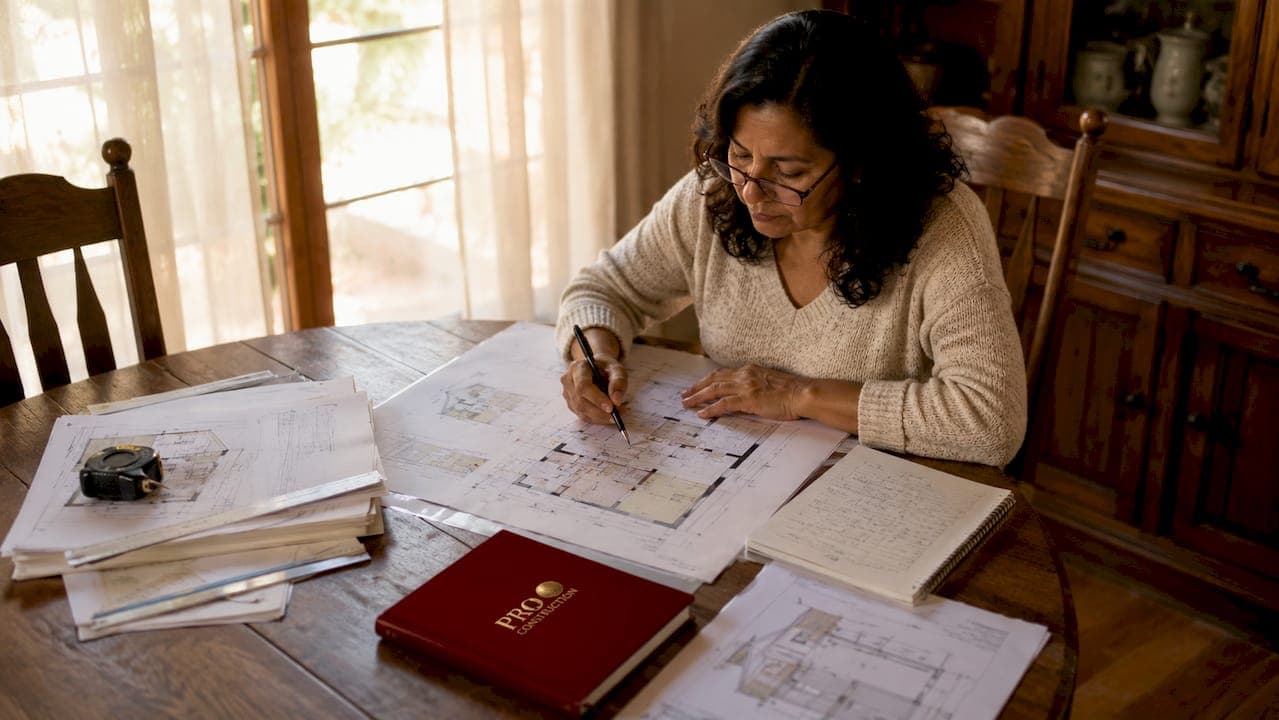
Home additions are structural expansions built onto an existing home to increase usable square footage, improve function, and raise property value. Unlike a full remodel, an addition creates entirely new space, whether that means a new bedroom, a larger kitchen, or a second story. In 2026, homeowners are choosing additions over moving at higher rates than ever, driven by persistent mortgage rates and the high cost of comparable homes. This guide covers types, costs, design integration, and planning steps so you can make a confident decision.
What types of home additions are available?
The term "home addition" covers a wide range of project types, each with a different cost profile and purpose. Understanding the differences helps you match the right solution to your actual space problem.
Here are the most common types of residential additions and what they typically involve:
- Bedroom addition: Usually 150–300 sq ft, added at the rear or side of the home. Ideal for growing families or multigenerational living.
- Kitchen addition: One of the most complex and expensive types. Kitchen additions cost $250–$500 per square foot due to plumbing, cabinetry, and finish requirements.
- Bathroom addition: Ranges from $150–$350 per square foot, driven by tile, fixtures, and plumbing rough-in costs.
- Second story addition: The most structurally demanding option. Second-story additions range from $200–$500 per square foot because they require foundation reinforcement, roof removal, and new stair access.
- Accessory Dwelling Unit (ADU): A self-contained living unit on the same property. ADUs are gaining traction in Texas due to multigenerational demand and short-term rental potential.
- Garage addition: A detached or attached structure that adds storage, workspace, or vehicle capacity without touching the main living area.
The table below compares the most common addition types at a glance:
| Addition type | Typical cost per sq ft | Primary complexity driver |
|---|---|---|
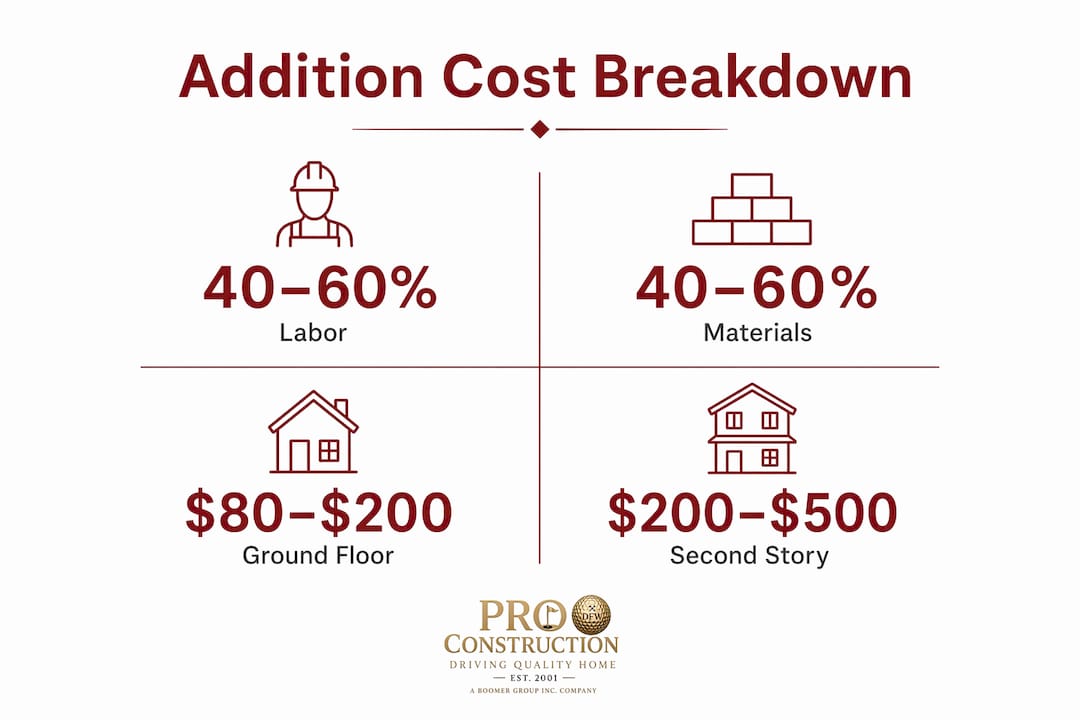
| Ground-floor room | $80–$200 | Foundation and framing |
| Kitchen | $250–$500 | Plumbing, cabinetry, finishes |
| Bathroom | $150–$350 | Plumbing and tile work |
| Second story | $200–$500 | Structural reinforcement, roof work |
| ADU | $150–$400 | Permitting, utilities, full finish |
Ground-floor additions are the most accessible starting point for most homeowners. Second-story and kitchen projects demand more planning, more budget, and more experienced contractors.
How do labor and material costs impact your budget?
Cost is the number one concern for homeowners planning an addition, and the breakdown often surprises people. Labor makes up 40–60% of a home addition's total cost. On a $100,000 project, that means $40,000 to $60,000 goes to skilled tradespeople including framers, roofers, electricians, and plumbers before a single material is purchased.
Material costs fill the remaining 40–60%, but the range within that figure is enormous. Basic framing lumber, standard windows, and builder-grade fixtures sit at the low end. Engineered hardwood floors, custom cabinetry, and premium roofing materials push costs toward the top of any range. The finish level you choose has a bigger impact on material costs than the square footage alone.
The most common budgeting mistake is ignoring soft costs. Soft costs including permits, design fees, soil testing, and impact fees can add 10–25% to your total project budget. Many initial contractor bids omit these entirely, so you need to ask for them explicitly.
Here is what to request in every contractor bid:
- Itemized labor costs by trade (framing, electrical, plumbing, HVAC)
- Material costs separated from labor
- Permit fees and inspection costs
- Design or architectural fees
- Any allowances for finishes, with clear dollar amounts
Pro Tip: When comparing contractor bids, never compare total numbers alone. Two bids at $120,000 can represent completely different scopes. Demand line-item breakdowns so you are comparing identical work.
Getting three or more detailed bids is the single most effective way to understand true market pricing in your area. A bid that looks low often excludes soft costs or uses lower-grade materials. A bid that looks high may include everything, making it the better value.
How do you achieve seamless architectural integration?
The biggest visual mistake in home additions is building something that looks bolted on. A well-executed addition should look like it was always part of the house. Matching roof pitch, window placement, and exterior finishes are the three most important design decisions for achieving that result.
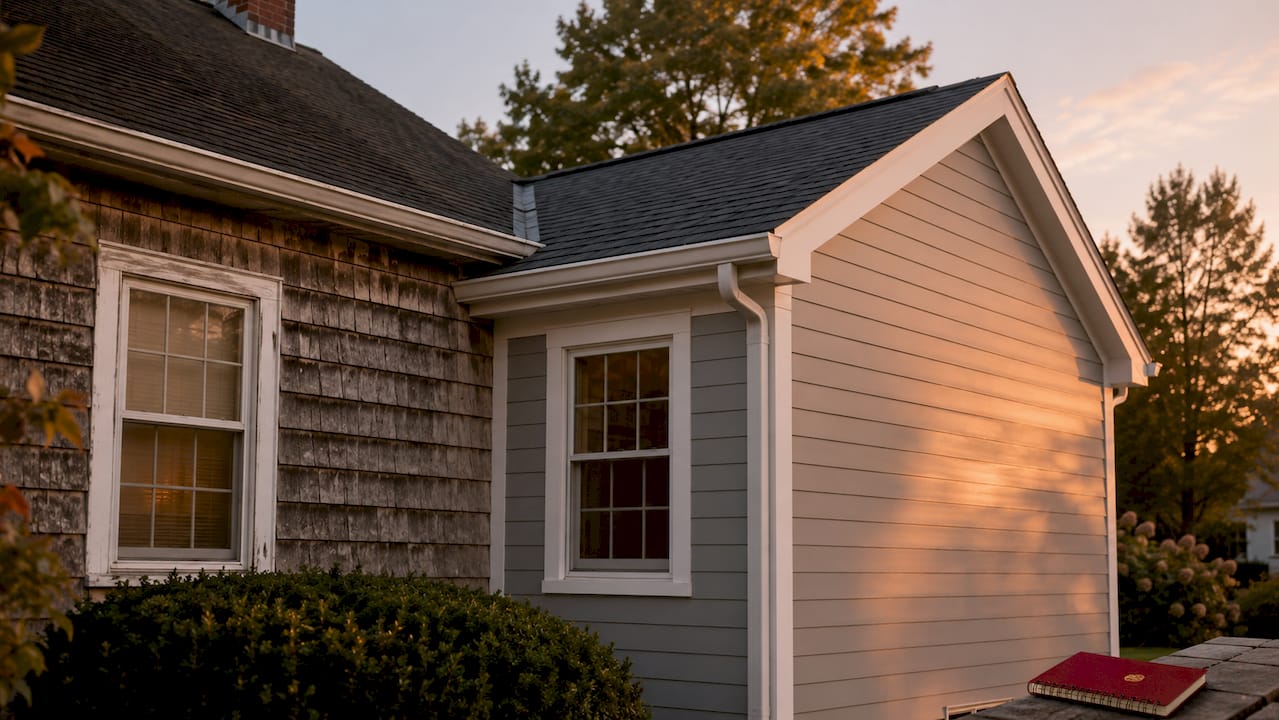
Roof pitch is often overlooked until the framing goes up. If your existing home has a 6:12 pitch and your addition uses a 4:12 pitch, the mismatch is visible from the street and can affect water drainage patterns. Window rhythm matters just as much. Spacing, size, and style should mirror the existing home's pattern, not just fill the new wall with whatever fits.
The design-build approach solves many of these problems before construction begins. Design-build professionals plan the addition as an integrated whole rather than an afterthought, which reduces costly mid-project adjustments and produces better results aesthetically and structurally.
The four critical tie-in points every addition must address are:
- Foundation connection: The new slab or footing must tie into the existing foundation without creating a differential settlement risk.
- Roof intersection: Where the new roof meets the old one is the most common source of water intrusion if not properly flashed and sealed.
- Wall framing connection: Structural loads from the new addition must transfer correctly into the existing wall system.
- Utility connections: Electrical panels, plumbing stacks, and HVAC systems must be sized to handle the added square footage.
"Tie-in points where the new addition connects to the existing structure, including rooflines and foundations, are frequent failure points if not properly engineered. Improper tie-ins can lead to water leaks and structural settling, causing costly repairs and visible damage over time." — O'Brien Construction
Poor integration does not just look bad. It creates expensive problems years later, including roof leaks, cracked drywall from settling, and HVAC systems that cannot maintain temperature in the new space. Getting the tie-ins right is not optional.
How do you plan and manage a home addition project?
Effective planning separates projects that finish on time and on budget from those that drag on for months with surprise costs. The home addition planning process has a predictable sequence, and skipping steps early creates problems later.
A realistic project timeline looks like this: architectural planning and permits typically take 4–8 weeks, followed by 3 or more months of construction covering foundation, framing, mechanical rough-ins, and finishing work. Multi-month timelines require you to plan for disruption to your daily routine, especially if the addition connects directly to living areas.
Key planning steps before breaking ground:
- Assess site constraints: Setback requirements, lot coverage limits, and utility easements all affect where and how large you can build.
- Establish a realistic budget: Include hard costs, soft costs, and a 10–15% contingency for unforeseen conditions.
- Complete design development: Finalize floor plans, elevations, and material selections before construction starts. Changes during framing cost three to five times more than changes on paper.
- Pull all required permits: Building without permits creates title problems when you sell and can require demolition of unpermitted work.
- Select your contractor carefully: Verify licensing, insurance, and references. Check BuildZoom rankings and review project portfolios specific to additions.
Pro Tip: Acting as your own general contractor saves money on paper but costs time, stress, and often money in practice. Unless you have construction experience, hiring a project manager or design-build firm is worth the added cost for a project over $80,000.
The contractor selection process deserves more time than most homeowners give it. A contractor's track record on additions specifically matters more than their general reputation. Ask for references from addition projects only, and visit completed jobs if possible.
Key takeaways
The most effective home addition combines accurate cost planning, proper structural integration, and a contractor with proven addition experience before a single permit is filed.
| Point | Details |
|---|---|
| Labor drives cost | Labor is 40–60% of total cost; always get itemized bids separating labor from materials. |
| Soft costs add up fast | Permits, design fees, and inspections add 10–25% to your budget and are often excluded from initial bids. |
| Integration determines quality | Matching roof pitch, window rhythm, and exterior finishes prevents the "bolted-on" look and structural problems. |
| Tie-ins are the highest risk | Foundation, roof, and wall connection points are the most common sources of leaks and settling if not engineered correctly. |
| Plan before you build | Finalize design and permits before construction starts. Mid-project changes cost three to five times more than paper revisions. |
What I have learned after 25 years of building additions in North Texas
The homeowners who get the best results from additions are not the ones with the biggest budgets. They are the ones who ask the most questions before signing a contract. After 25 years building additions across Keller, Fort Worth, and the broader DFW area, the pattern is consistent.
The single biggest shift I have seen in 2026 is that homeowners are no longer treating additions as a last resort. Families are choosing to stay in their neighborhoods and invest in their existing homes rather than trade up into a higher mortgage rate. That mindset shift changes how people approach the planning process. They are more deliberate, more patient, and more focused on long-term value.
What I push back on most often is the instinct to cut costs on integration details. Homeowners will spend freely on countertops and flooring but resist spending on proper flashing, engineered tie-ins, or a structural engineer's review. Those are the decisions that determine whether an addition holds up for 30 years or starts showing problems in five.
My honest advice: treat the addition as a permanent part of your home from day one of planning, not as a project you are trying to get done cheaply. The quality of your contractor communication, the completeness of your bid review, and the care taken at every tie-in point will matter far more than the brand of your light fixtures.
— PRO
Ready to build your addition with a team you can trust?
PRO Construction has spent over 25 years building home additions across Keller, Fort Worth, and North Texas. The team handles everything from design development through final inspection, with transparent communication at every phase so you always know where your project stands.
PRO Construction holds a top 1% ranking on BuildZoom, and current discount opportunities are available for qualifying projects. Whether you are planning a ground-floor room addition or a full second story, the team brings the structural expertise and project oversight that complex additions require. Visit the home addition contractors page to learn more about services, pricing, and how to get started with a consultation. Fort Worth homeowners can also explore the dedicated Fort Worth additions guide for local market details.
FAQ
What is the average cost of a home addition in 2026?
Ground-floor additions average $80–$200 per square foot, while second-story additions range from $200–$500 per square foot. Kitchen and bathroom additions sit at the higher end due to plumbing and finish costs.
How long does a home addition take to complete?
Most additions require 4–8 weeks for permits and design approval, followed by 3 or more months of construction. Total timelines of 4–6 months are common for mid-size projects.
Do I need a permit for a home addition?
Yes. Building without permits creates legal and title issues that surface when you sell the home and can require demolition of unpermitted work. Always pull permits before construction begins.
What is the most expensive type of home addition?
Kitchen additions are among the most expensive, ranging from $250–$500 per square foot. Second-story additions are similarly priced due to structural reinforcement and roof modification requirements.
Should I use a design-build firm or hire separately?
A design-build firm coordinates architecture and construction under one contract, which reduces miscommunication and mid-project changes. For additions over $80,000, the integrated approach typically saves time and produces better structural results.